 Forgotten Kitchen
Equipment
The Kitchen Work Done before Dinner Reached the Table
Nineteenth-century service manuals placed much of dinner's preparation before the first plate reached the table: consult the cook, anticipate utensils, arrange a working reserve and prepare food through its separate stages. Some tasks still depended on the moment of service. Robert Roberts's 1828 household directory and Tunis G. Campbell's 1848 hotel guide show how those intervals connected.
- Dinner service
- Preparation
- Kitchen work
Their directions describe systems offered to readers. They also reveal the practical decisions beneath a composed dining room, from where to put spare spoons to when fried bread should enter a bowl of soup.
The menu was information for the waiter
In “Regulations for the Dinner Table,” Roberts asks the learner Joseph to consult the cook before arranging dinner. What is to be served, and is there a particular way it should be sent up? The answers determine placement and anticipated needs. A bill of fare becomes a working exchange between the kitchen and the person waiting at table.
This consultation matters because fetching an omitted utensil interrupts service. Roberts criticizes shortages of plates and spoons and poorly defined duties. More people do not necessarily resolve confusion if they obstruct one another. His reserve on the sideboard and side table places objects needed first within easy reach. Roberts, The House Servant's Directory, second edition, 1828, printed pp. 44–52, scan leaves 52–60.
The instructions contain a revealing tension. Roberts says one man cannot wait perfectly on eight or ten diners, especially with many changes, then teaches Joseph how to serve ten without another manservant. The lesson helps someone manage a difficult assignment. It does not establish ten diners as an ideal staffing ratio.
Advance arrangement also has limits. Roberts delays bringing cheese into the room because its smell might offend guests. Readiness means deciding what belongs nearby and what should wait elsewhere. It does not mean putting every edible component on display as soon as possible.
Quiet service required a view of the table
Roberts tells the waiter to avoid any appearance of agitation. That composure rests on more than bearing. His recommended position near the foot of the table allows the waiter to see plates needing attention. Before removing dishes, he signals the cook and follows the host's signal for a course change.
Preparation supplies objects; observation supplies the moment to use them. The waiter needs both. A stock of plates cannot replace communication with the cook, and knowledge of the menu cannot reveal when a guest has finished eating.
Roberts's professional advice also belongs to a particular social setting. Gore Place identifies him as a Black author and skilled household worker and connects his teaching with improved standing and self-respect for servants. His exacting advice is part of that professional project, not an invitation to imagine every nineteenth-century dining room as an identical workplace. Gore Place, “Who was Robert Roberts?”.
Campbell's moving clock had exceptions
Campbell's guide addresses hotels and private families, with the hotel operation making its coordinated service especially clear. His dinner sequence assigns positions and movements, uses signals and returns objects to their places. Later he compares the head waiter to the regulator of a clock, governing the pace of the courses.
Yet the instruction is more flexible than an image of everybody marching in time. Campbell expressly exempts the bread and brush men from keeping time with the others. He also calls for readers' judgment. Different jobs can belong to one coordinated service without taking identical amounts of time. Campbell, Hotel Keepers, Head Waiters, and Housekeepers' Guide, held 1848 printing, printed pp. 13–19 and 89–90, scan leaves 19–25 and 95–96.
Order carried authority as well as convenience. Campbell's system includes discipline and reprimand; a calm room should not erase the demands placed on the people producing it. The New Georgia Encyclopedia identifies Campbell as a free-born Black hotel steward and reformer and describes his concern with skilled work and respectful treatment. Russell Duncan, “Tunis Campbell”.
A spoon returned through the pantry
One small object makes the contrast between the manuals tangible. Roberts wants enough utensils to prevent disruptive washing during dinner. Campbell plans for pantry workers to wash spoons after soup. Waiters then collect their own spoons for their stations' vegetables and gravies.
In one selected arrangement, extra equipment moves washing beyond the immediate interval. In the other, another group's washing becomes a scheduled dependency. Neither passage gives the staff numbers, workload or timings needed to calculate which system used less total labor. The pantry remains part of service even when diners do not see it.
The food had its own sequence
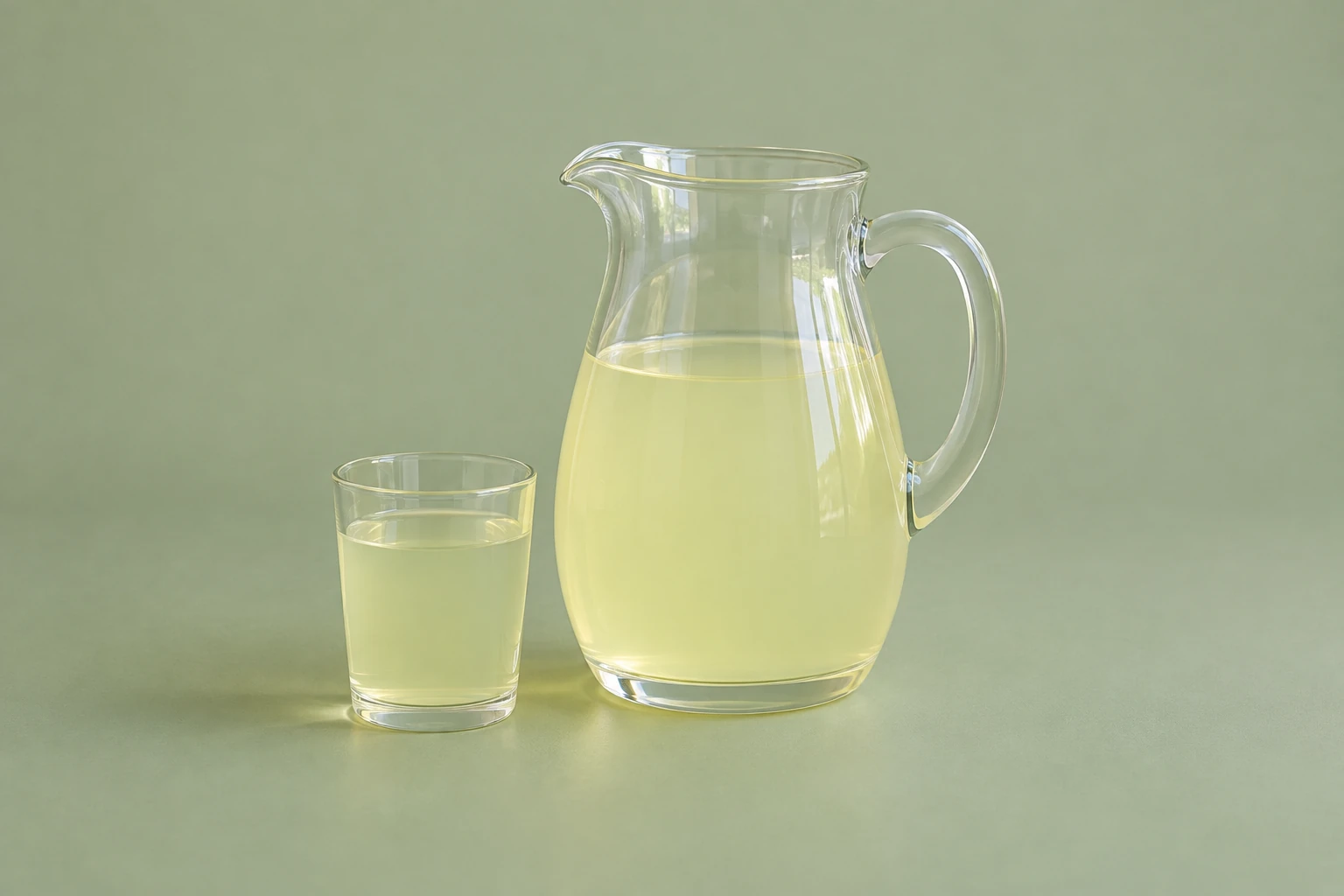
Roberts's lemonade no. 57 illustrates a preparation that can be ready before guests need it: mix water, lemon juice, selected lemon zest and sugar, strain, then cool the vessel in ice. Juice from ten lemons and zest from six have separate roles. The directions do not require putting ice into the drink. His separate day-before lemonade has a long infusion and milk clarification; those operations belong to a different recipe. Roberts, printed pp. 98–99 and 103, scan leaves 106–107 and 111.
Campbell's brown soup is more layered. Its first bread-thickened infusion is strained. Later vegetables remain in the finished soup, joined to browned butter and flour. Some fried bread enters the serving dish; the rest goes to table separately. The division preserves a finishing decision even after the long initial cooking.
The lemonade can be strained and chilling while the soup's first infusion cooks. The bread still waits for the final frying and split service. Advance preparation clears space for those last decisions; it doesn't require every component to be assembled early.
Roberts's simple iced lemonade
Modern adaptation of no. 57, “Another Excellent Lemonade, by R. R., the Author of This Book.” Makes about five small servings; measure the finished quantity before dividing. Estimated preparation: 15 minutes; allow 30–60 minutes or longer to chill. Equipment: fine sieve, covered jug of at least 1.5 liters and a bowl for an ice-water bath.
Ingredients
- 946 ml cold drinking water
- Juice from 2½ good-sized lemons
- Thin yellow zest from 1½ of those lemons, taken in strips without white pith
- 113 g granulated sugar
- Ice and cold water for a bath around the jug, kept separate from the drink
Method
- Wash three lemons. Take zest from one whole lemon and half a second. Squeeze two whole lemons and half the third; reserve the unused fruit for another use.
- Mix the measured drinking water, specified juice, zest and sugar until the sugar dissolves.
- Strain through the fine sieve into the jug, discarding zest and seeds. Cover.
- Stand the jug in an ice-water bath, keeping bath water out. Stir the bath occasionally and chill until cold, finishing in the refrigerator if needed. Serve without counting the bath ice as a drink ingredient.
- Refrigerate covered leftovers at 40°F/4°C or below and use the following day.
The quarter batch uses a declared modern US-gallon convention for water, without proving Roberts's vessel capacity. Sugar is rounded from about 113.4 g. The original gives no juice volume or chilling time; lemon size affects both flavor and yield. The differing juice and zest counts are preserved.
Campbell's brown vegetable soup
Modern adaptation of “To make a Brown Soup,” printed pp. 149–150, scan leaves 155–156. Makes about six starter bowls; finished volume varies. Estimated preparation: 25 minutes; cooking: about 2 hours 15 minutes. Equipment: covered 3-liter saucepan, sieve, frying pan, measuring jug and a separate bread plate.
Ingredients
- 1.42 liters water
- 150 g onion, peeled and quartered
- 1 whole clove
- 6 black peppercorns
- 3 g fine salt, plus up to 1 g after tasting the cooked soup
- 40 g dry bread crust crumbs
- 100 g celery, cut in roughly 1 cm pieces
- 120 g peeled carrot, cut in roughly 1 cm pieces
- 50 g each endive, lettuce and spinach, washed and coarsely shredded
- 4 g chopped parsley
- 65 g unsalted butter, divided into 20 g, 30 g and 15 g portions
- 20 g all-purpose flour
- 90 g bread, cut into approximately 1.5 cm cubes
Method
- Put water, onion, clove, peppercorns, 3 g salt and dry crumbs in the covered saucepan. Bring to a boil, then maintain a gentle covered boil for about 90 minutes. Strain into the jug, discarding all these infusion solids. Measure the liquid; no fixed recovered amount is assumed.
- In the frying pan, cook celery, carrot, greens and parsley in 20 g butter for about 8–10 minutes, stirring, until beginning to soften. These vegetables will remain in the soup.
- Melt 30 g butter in the clean soup pan. Stir in flour and cook over medium-low heat, stirring continuously, until nut brown but not scorched. Gradually stir in the strained liquid, then add the fried vegetables. Simmer about 15–25 minutes, until the vegetables are tender and the soup thickened. Taste and add up to 1 g extra salt if needed.
- Fry the bread cubes in the remaining 15 g butter until browned, turning them as needed. Pour the hot soup into a serving bowl. Add about one-third of the fried bread to it and put the rest on a separate plate for the table.
- Serve promptly, dividing among six bowls. Cool leftover soup promptly in shallow containers, refrigerate at 40°F/4°C or below and use within three days. Keep remaining bread separately. Bring soup to a boil when reheating and check that it reaches 165°F/74°C throughout.
Only the minimum water quantity is halved from Campbell's three quarts. Weights for his unmeasured ingredients, butter allocation, piece sizes, bread split, modern equipment and later cooking estimates are supplied choices. “Raspings” is interpreted as dry crust crumbs. No meat stock is added. FDA safe handling governs prompt refrigeration within two hours, or one hour above 90°F/32°C, and reheating.
Other places dinner's work happened
Read about the larder and pantry, the concentrated ingredient portable soup, and the equipment behind cooking before stoves.