 Forgotten Kitchen
Equipment
How Did People Cook Before Stoves?
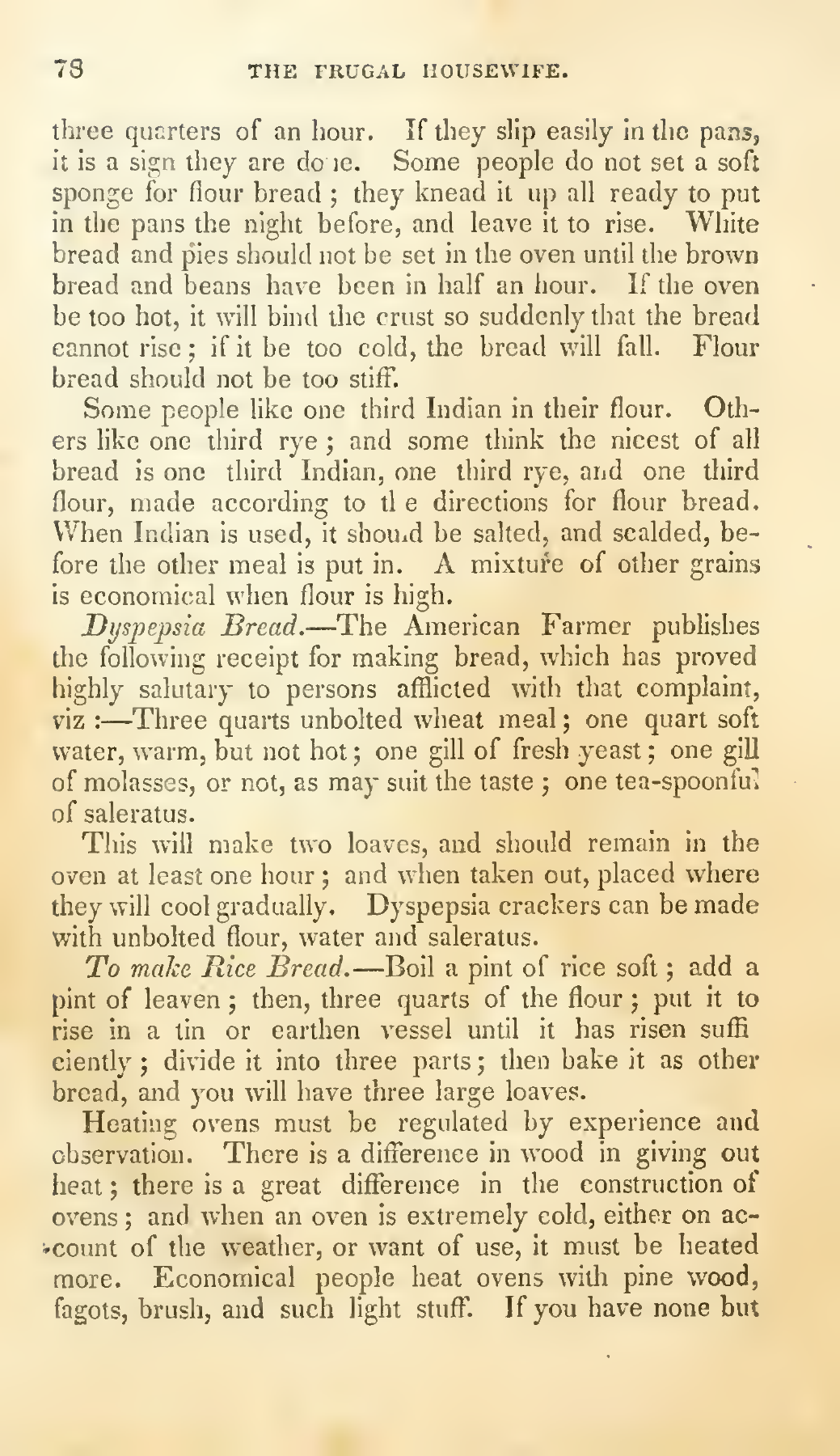
Lydia Maria Child tells the cook to wait before putting white bread and pies into the oven. Brown bread and beans should already have been inside for half an hour. Different foods entered at different stages of the same bake.
- Hearth cooking
- Cooking heat
- Kitchen equipment
Without a cooking stove combining several jobs, a kitchen could use suspended pots, vessels placed beside the fire, roasting equipment and a separate oven. Their positions and schedules mattered. Child's American household manual of 1838 and the National Park Service's interpretation of Fort Scott kitchens in the 1840s show particular arrangements, rather than one universal way everyone cooked before a single changeover date.
The oven had a timetable
Child's instruction puts the oven load into a sequence. Brown bread and beans enter before white bread and pies. She also warns that too much heat can set a bread crust before the loaf rises, while too little can allow the bread to fall. The waiting is attached to the foods being baked. Child, The American Frugal Housewife, twenty-second edition, 1838, p. 78.
Heating the oven is a job of its own. Child says it must be governed by experience and observation, then names sources of variation: the wood, the oven's construction, the weather and how long the oven has stood unused. An especially cold oven needs more heating.
Her discussion continues onto the next page with distinctions between fuels and between the bakes being prepared. A heating period isn't presented independently of those circumstances. Copying a duration alone would leave out the conditions that accompany it. Child, 1838, pp. 78–79.
This makes the bread instruction more than a list of cooking times. The cook has to prepare the oven for the intended load, recognize when its heat is suitable and decide when the next food belongs inside. The oven's timetable extends beyond the moment a pan crosses its threshold.
Our slack-oven article follows a different part of that judgment: how a food's changing needs could call for gentler heat.
A pot's position could change
Child's cake directions show another kind of sequence. One mixture goes into a greased spider or bake-kettle and is covered. Another preparation begins in a bake-kettle hanging over the fire, then moves to a position before it. Child, 1838, p. 76.
The movement is part of the method. “Over” and “before” describe different relationships between vessel and fire. A modern rewrite that merely says “cook in a pan” would remove that change even if it preserved the ingredients.
A cover is another piece of equipment information. Child names it in one preparation; the other explicitly begins uncovered. Her directions don't reduce to a single rule that every covered pot was surrounded by coals or every kettle remained suspended throughout cooking.
The same vessel could take part in more than one stage. To picture the method, follow where it goes and when its position changes.
Hooks and hinges helped manage the fire
Fort Scott's interpreted equipment helps explain some of the hardware. The National Park Service describes a crane as a hinged iron bracket carrying suspended pots. It could swing to help the cook hang, tend or remove them. Pothooks connected vessels to the crane; an adjustable trammel changed the hanging height. Supports for a spit could likewise alter the roast's distance from the fire. National Park Service, Fort Scott, “Tools of the Trade”.
These descriptions explain ways to move food relative to heat. A pot could be raised or lowered, or brought within reach, without the arrangement depending on a stove burner setting.
They also explain why a hearth scene needs more than a flame and a black pot. The support determines where the vessel can sit or hang. Its fittings help make the instructions in a recipe possible.
Roasting and gravy were separate jobs
Child's gravy directions begin with meat roasting in a tin-kitchen. Near the end, the drippings move into a skillet for boiling. Roasting the meat and finishing its gravy use different vessels and operations within the same preparation. Child, 1838, p. 52.
The transfer is easy to miss when concentrating on the finished roast. It tells us that dinner's components didn't necessarily stay together in one piece of equipment until serving.
A tin-kitchen also needs more explanation than its familiar-sounding name provides. Our Dutch-oven history considers fire-facing roasting equipment and the separate heating jobs that an old equipment name can conceal.
A bakehouse beyond the company kitchen
At Fort Scott in the 1840s, the National Park Service places most cooking in ground-floor fireplaces in the barracks and officers' quarters. The stoves documented there between 1842 and 1853 served heating rather than cooking. That's a statement about the post's evidence, not a claim that cooking stoves were unknown elsewhere. National Park Service, Fort Scott, “Cooking—Overview”.
Bread adds another space to the picture. The post had a bakehouse, separate from the company cooking arrangements. Its kitchen history therefore includes the movement of work between buildings as well as the movement of vessels around a fire. National Park Service, Fort Scott, “Historical Background”.
Child's household advice and this military setting shouldn't be collapsed into one model kitchen. One describes a family oven schedule; the other includes provision for companies of soldiers and a post bakehouse.
What both make visible is the distribution of cooking jobs. In Child's pages, the bread waits for its place in the oven, the bake-kettle changes position and the roast's drippings move to a skillet. Keep those transfers when reading the recipe. They're the instructions that tell you where the heat was doing its work.