 Forgotten Kitchen
Equipment
What Was a Chafing Dish? Supper Cooked at the Table
A chafing dish was a portable pan heated from beneath, used to prepare or keep food hot close to the people eating it. In the two supper books considered here, cheese cooks either directly over the heat or in a pan above hot water. The arrangement changes what the cook must watch.
- Chafing dishes
- Cheese
- Table cooking
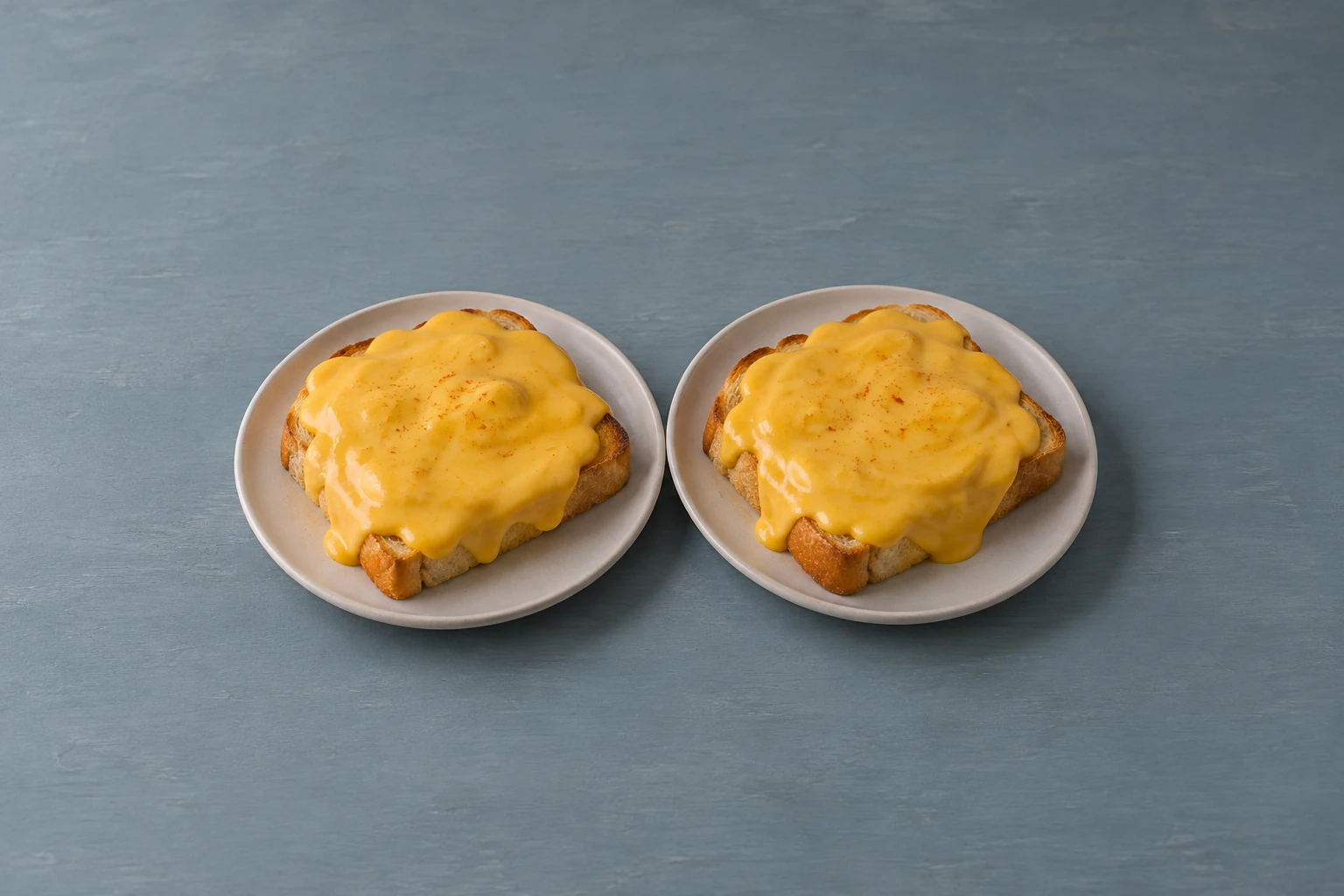
The company watched the stirring
Deshler Welch's The Bachelor and the Chafing Dish puts an audience around the amateur cook. His Welsh rabbit begins with enough cheese for six people, already cut up or grated. The company can comment while the cheese melts, the seasonings go in and the cook judges the liquid. Stirring becomes something to watch as well as something the supper needs.
The 1896 title page and separate 1895 copyright identify the book. Its rabbit directions continue across two pages, ending with an insistence on thorough stirring and beating. Welch's confidence is part of the pleasure of the passage: he makes a small pan seem an occasion for skill, argument and company. Welch, pp. 5–6.
Rabbit here is the cheese preparation. The printed quantity is substantial: two pounds for the proposed six diners. That gives a cheese input per person, rather than a record of how much anyone ate. The passage has no guest list or date for an actual supper. Its interest is the invitation it makes to readers who might like to cook before their friends.
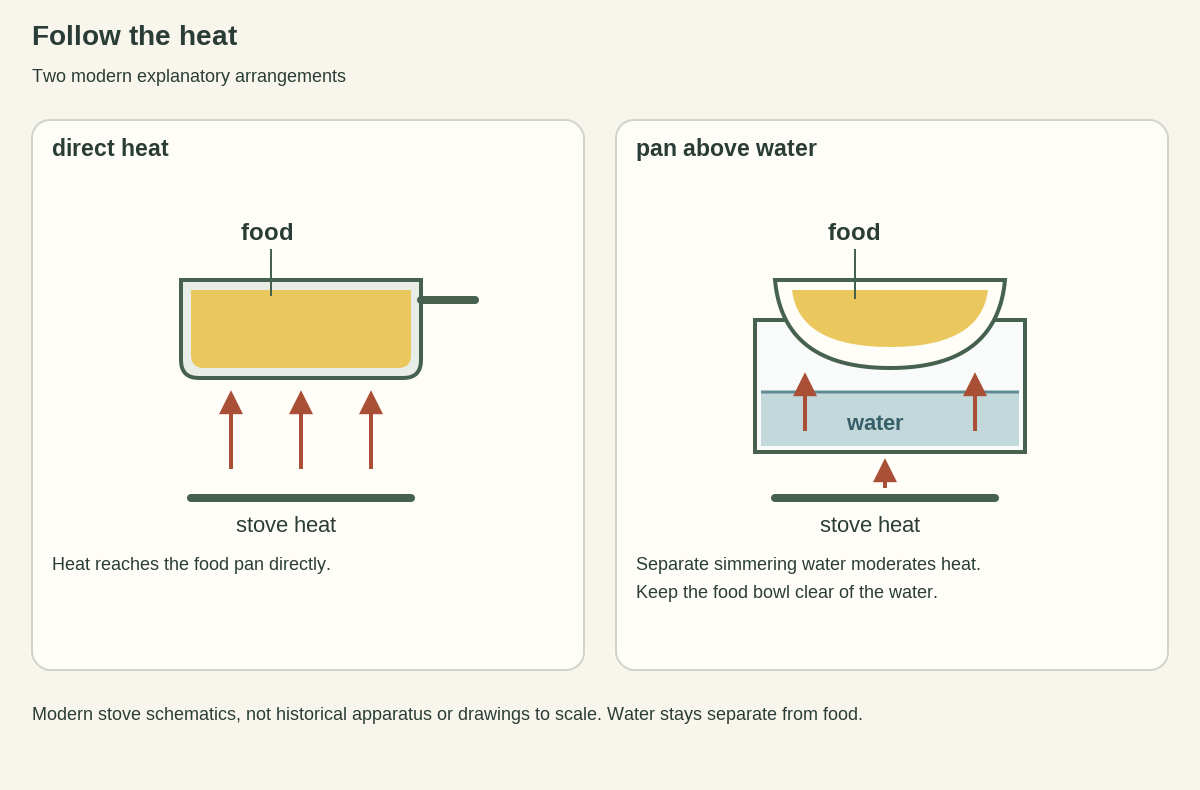
Direct heat or a pan above water
Welch puts his dish immediately over the fire. Butter melts first, then cheese; seasonings dissolved in ale or beer follow, with a further quarter pint of the drink. The first dissolving liquid has no stated quantity. Bread or toast and heated plates are ready for quick service.
May E. Southworth's Reliable Rarebit uses another arrangement. A lower pan is half-filled with boiling water and the food pan sits above it. Butter, mustard, sauces and beer enter before the cheese. As the cheese melts, the cook adds further beer a little at a time. Her observation that cheeses require different amounts of liquid leaves the final adjustment with the cook. Southworth, Midnight Feasts, copyright 1914, p. 129.
Both methods involve attention, but the heat reaches the food differently. The water pan moderates the heat delivered to the upper vessel; it is a separate piece of the cooking arrangement, rather than extra water in the sauce. Following the heat is equally useful when identifying the quite different equipment gathered under the name Dutch oven.
What had to be ready
Welch's lively scene starts after several decisions have already been made. Someone has obtained and prepared the cheese, mixed the seasonings, arranged bread and warmed plates. The recipe then asks the cook to coordinate melting with service. A guest watching the pan sees the finishing operation more readily than the shopping or grating.
The bread matters to that coordination. Welch describes dipping it into the hot mixture and serving promptly. Toast made after the cheese is ready would interrupt the sequence. His apparatus can move a cooking operation to the table, but it cannot make every ingredient ready at once.
Kitchen space also had divided functions. The pantry could serve dining-room work, including table equipment and washing, as well as storage. A portable food pan belongs in that larger geography of preparation and service. Its size alone tells us little about how a particular household organized the rest of the meal.
The bachelor was a literary host
Welch's narrator offers more than quantities. A hungry friend called Jim, a bachelor apartment and the contrast with a servant's basement kitchen help him make cooking sociable and personal. Those scenes tell us how the book presents its host. They leave the provision of a real apartment, and the people who worked in it, much less fully described.
Laura Naus's study of chafing-dish books draws attention to practiced preparation behind apparently spontaneous cooking and to the watching company's participation. That helps explain why familiar cheese dishes could suit the apparatus so well: there was enough visible action for company, without requiring the host to begin a long meal from raw materials. Naus, The Most Social Utensil in the World, 1991, pp. 43–44 and 54–56.
Southworth planned the rest of supper
Southworth's introduction addresses informal late suppers and includes college boys and girls in its appeal. Her title page is undated; the separate copyright page supplies 1914. The title does not turn Welch's earlier rabbit scene into a midnight event.
Her menu advice is practical. A substantial hot dish can be paired with a simple salad, or a more elaborate salad with a simpler hot accompaniment. Sardines, salads, relishes and crackers place the chafing dish among other foods. The supper remains a menu, with cold preparation alongside the heated pan. Southworth, introduction, pp. iii–vi.
For a modern demonstration, an ordinary saucepan and a secure double-boiler arrangement let the two cheese methods be compared at the stove. Both versions below follow the beer route, although Welch also explicitly allows milk. The different cheese quantities and serving sizes remain visible, rather than making the two recipes look like interchangeable batches.
Welch-style Welsh rabbit on toast
Modern adaptation. Yield: 2 substantial toast portions. Estimated time: 10 minutes preparation and 10–15 minutes cooking, about 25 minutes total.
Ingredients
- 300 g mature Cheddar made from pasteurized milk, freshly grated
- 10 g unsalted butter
- 1 heaped metric teaspoon prepared mustard
- 1/8 metric teaspoon paprika
- 1 small pinch fine salt
- 55 ml pale ale or beer, divided: 15 ml for seasonings and 40 ml for the pan
- Up to 15 ml additional ale or beer, only if needed
- 2 slices bread, about 80 g total, toasted
Equipment: Small heavy saucepan, spoon or whisk, toaster and two warm plates. A metric teaspoon is 5 ml; the mustard spoonful is deliberately heaped.
Method
- Make the toast and warm the plates. Mix the mustard, paprika and salt with the 15 ml seasoning beer.
- Melt the butter in the saucepan over low heat. Add the cheese and stir, gradually incorporating the 40 ml pan beer and seasoning mixture as the cheese melts.
- Keep stirring over low heat until melted and spoonable. Add the additional beer a little at a time only if needed; you may not need it all. Avoid a hard boil.
- Divide over the toast and serve immediately.
Adaptation notes: The cheese is a rounded third of Welch's two-pound batch. Butter, toast weight, the initial 15 ml beer allowance and the smaller seasoning measures are modern choices. The further 40 ml beer uses a declared modern US-pint interpretation. Early addition of liquid, low stove heat and stirring replace his later liquid addition, boiling-point direction and final beating. Extra beer adjusts this particular sauce; it is not a universal cheese-to-liquid ratio.
Southworth-style water-bath rarebit
Modern adaptation. Yield: 2 small toast portions. Estimated time: 10 minutes preparation and 10–15 minutes cooking, about 25 minutes total.
Ingredients
- 115 g Cheddar made from pasteurized milk, freshly grated
- 5 g unsalted butter
- 1/8 metric teaspoon dry mustard powder
- 3/4 metric teaspoon Worcestershire sauce
- 1/8 metric teaspoon hot sauce
- 15 ml pale ale or beer, plus up to 15 ml more only if needed
- 2 small slices bread, about 60 g total, toasted
Equipment: Small saucepan and a heatproof bowl that sits securely above its water, spoon or whisk, toaster and warm plates.
Method
- Make the toast and warm the plates. Set the heatproof bowl over gently simmering water, keeping its base clear of the water. Keep water in the lower pan throughout cooking.
- Put the butter, mustard, sauces and first 15 ml beer in the bowl. Stir until the butter melts.
- Add the cheese and stir constantly until melted. Add a little of the extra beer only as needed for a thick, spoonable sauce.
- Carefully lift the bowl away from the steam. Divide over the toast and serve promptly.
Adaptation notes: This is approximately a quarter of Southworth's cheese allowance, with Cheddar replacing her unspecified American-and-cream mixture. Toast, its weight and two small portions are supplied. The kitchen water bath retains her indirect-heat principle. The optional extra liquid remains separate from the starting allowance.
Keep dairy refrigerated until preparation. Refrigerate leftover sauce promptly in a shallow container within two hours, or one hour above 90°F (32°C), following FDA food-handling guidance. These recipes contain milk and wheat; mustard and Worcestershire sauce can add other allergens, including fish, so check their labels.