 Forgotten Kitchen
Ingredients
How Early Recipes Made Drinking Chocolate
Two seventeenth-century English recipes made drinking chocolate by mixing a prepared solid chocolate cake with sugar and hot water, then working the liquid with a small hand tool. The cake was a compounded chocolate ingredient, not a baked dessert. The directions differ in which ingredient enters the vessel first and what to do when the mixing tool is missing.
- Chocolate
- Mixing
- Prepared ingredients
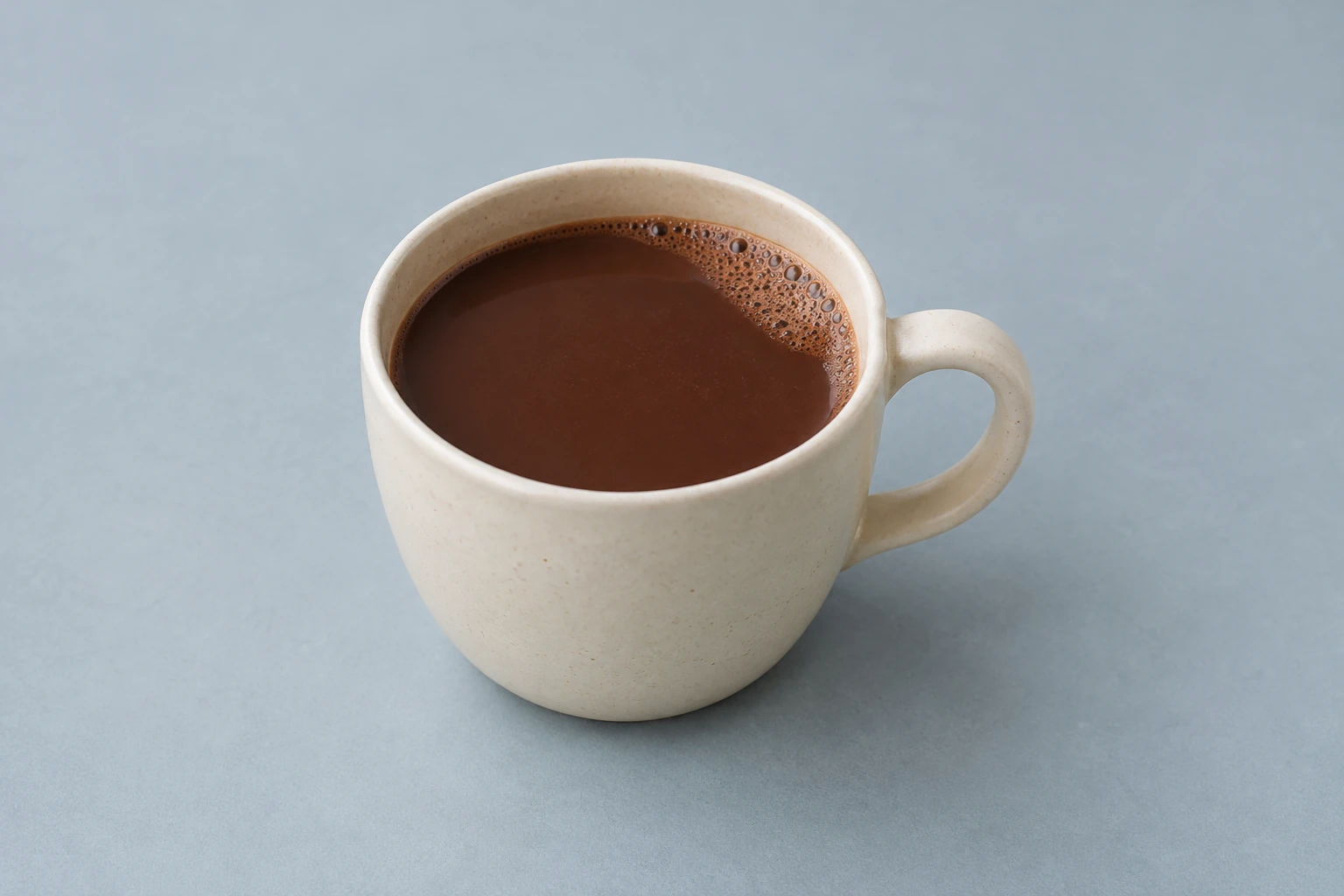
One version offers a memorable substitute: pour the drink between two pots twenty times. Even its author prefers the little mill. That qualification makes this a useful window into early drinking chocolate, where a quick cup depended on ingredients already prepared and equipment close at hand.
The chocolate was prepared before the water heated
The short method in Antonio Colmenero de Ledesma's Chocolate: or, An Indian Drinke, translated into English by Captain James Wadsworth in 1652, begins while water warms. Scraped chocolate and sugar go into a little cup. The hot water is poured onto them, and the cook dissolves the chocolate with a molinet. The foam stays on the drink. No chocolate weight, water volume or sugar quantity is given. Colmenero and Wadsworth, printed p. 35, scan leaf 49.
Earlier pages explain the substantial preparation behind that modest beginning. Cacao and aromatics are dried and ground separately, then mixed and worked with gentle heat into a paste. Ingredients other than cacao are sieved. The paste is formed into cakes and allowed to harden in the shade. The directions pay attention to burning, drying and the surfaces from which the cakes will release.
Thus scraping a tablet was already several operations removed from handling cacao beans. The person making the cup might have prepared the cakes earlier or acquired them from someone else. The quick direction leaves that choice open. Its convenience begins with a usable ingredient waiting for the drinker.
There was also a concrete London offer. The 1652 title advertised both the tract and chocolate through John Dakins near the Vine Tavern in Holborn. Instruction and ingredient were available from the same address. The notice gives neither a recorded purchase nor a price from which to calculate the cost of a cup. It does show how someone could obtain chocolate without personally performing every compounding operation in the book. 1652 title and compounding directions, pp. 29–32, scan leaves 1 and 43–46.
A little mill and a twenty-transfer alternative
The chocolate treatise within The Manner of Making of Coffee, Tea, and Chocolate (London, 1685) gives a related quick preparation. Its separate title names Colmenero and translator John Chamberlayne. Although the collection is often cataloged under Dufour, every statement in its chocolate section should not become Dufour's personal testimony.
Here the cake may be pounded or, preferably, grated finely and mixed with sugar. The chocolate enters the hot water. The pot is taken from the fire and the drink worked with the little mill. If the implement is unavailable, the alternative is twenty transfers from one pot to another. The same passage says that this incorporates the drink less well than the mill. 1685 chocolate title, scan leaf 57; quick method, pp. 109–110, leaves 117–118.
The mill belongs at the liquid stage. Wadsworth's appended explanation describes a wooden implement turned between the hands to make the drink froth and incorporate the chocolate. It is neither a flour mill nor equipment for grinding raw cacao. A small whisk supplies the relevant action in the modern recipes below.
Scraping in 1652 and preferred grating in 1685 both reduce the prepared solid before mixing. Their presence cannot establish that the later book invented that preparation. The reversed order of addition is a real difference in the printed directions, but the books give no measured comparison of its effect. The particularly useful addition is an explicit fallback for a missing implement, accompanied by its limitation.
Why the foam stayed
Both quick methods finish by retaining the surface foam. The old word “scum” can mislead a reader expecting it always to mean something discarded. An earlier hot method in the books removes foam temporarily and returns it after heating the remaining liquid. The quick preparation omits that separation.
Bottom sediment receives separate treatment in the surrounding text. It should not be confused with the foam simply because both can interrupt a perfectly uniform cup. For the short method, the visible surface was part of the intended drink. Colmenero and Wadsworth, 1652, pp. 32–33; Colmenero and Chamberlayne, 1685, pp. 105–107.
Nor was the prepared cake a standardized modern bar. Its aromatics and sugar could vary. A present-day 70% dark chocolate gives a clearly specified ingredient for a cookable adaptation, while leaving the original cake's flavor unreconstructed. The quantities below are modern choices because the quick historical paragraphs supply none. Keeping the same ingredients in both cups makes the change in mixing order easy to follow. The twenty transfers remain on the historical page; neither recipe asks you to shuttle hot liquid between pots.
Whisked water chocolate
Modern adaptation of the 1652 water-onto-chocolate method. Makes one drink from 200 ml water; finished volume varies. Estimated time: 8–10 minutes. Equipment: small saucepan, whisk, heatproof mixing jug of at least 400 ml and a large cup.
Ingredients
- 40 g plain, unfilled 70% dark chocolate, finely chopped
- 200 ml water
- 0–5 g granulated sugar, to taste
Method
- Put the chocolate and your chosen sugar quantity in the heatproof jug.
- Heat the water in the saucepan until steaming and just beginning to simmer.
- Pour a small amount onto the chocolate and whisk to a smooth paste. Gradually whisk in the remaining water. Keep the jug on a stable surface.
- Whisk briefly to raise a little foam, then pour into the cup. Let it cool to a comfortable drinking temperature and serve immediately, retaining the foam.
The chocolate type, quantities, staged addition and estimated time are supplied for this adaptation. A whisk replaces the molinet. This is intended for immediate drinking; no storage interval is needed.
Saucepan water chocolate
Modern adaptation of the 1685 chocolate-into-water method. Makes one drink from 200 ml water; finished volume varies. Estimated time: 8–10 minutes. Equipment: small saucepan of at least 500 ml, small bowl, whisk and a large cup.
Ingredients
- 40 g plain, unfilled 70% dark chocolate, finely grated or chopped
- 200 ml water
- 0–5 g granulated sugar, to taste
Method
- Mix the prepared chocolate and your chosen sugar quantity in the bowl.
- Heat the water in the saucepan until it just begins to simmer, then remove the pan from the heat.
- Add the chocolate mixture to the water. Whisk until dispersed and lightly foamy, about 30–60 seconds, continuing briefly if pieces remain.
- Pour into the cup, allow to cool to a comfortable drinking temperature and serve immediately with the foam.
This version supplies the same modern quantities as the first. Whisking replaces both the mill and the hot-liquid transfer alternative, so it does not reproduce the latter's result.
Read on
Old recipes often assume an ingredient has already been prepared. Compare a counted cake of yeast, the concentrated material called portable soup, and the vessel-dependent measure teacupful.