 Forgotten Kitchen
Ingredients
What Was a Cake of Yeast in an Old Recipe?
A yeast cake was a portion of yeast that a cook could break up and measure by fractions. Historical cakes could be compressed yeast or dried yeast; the product determined their size, keeping qualities, and preparation. For a modern replacement, identify the yeast form, any stated cake weight and the rising schedule. An unknown historical cake weight cannot supply a precise gram amount.
- Yeast
- Bread
- Ingredient forms
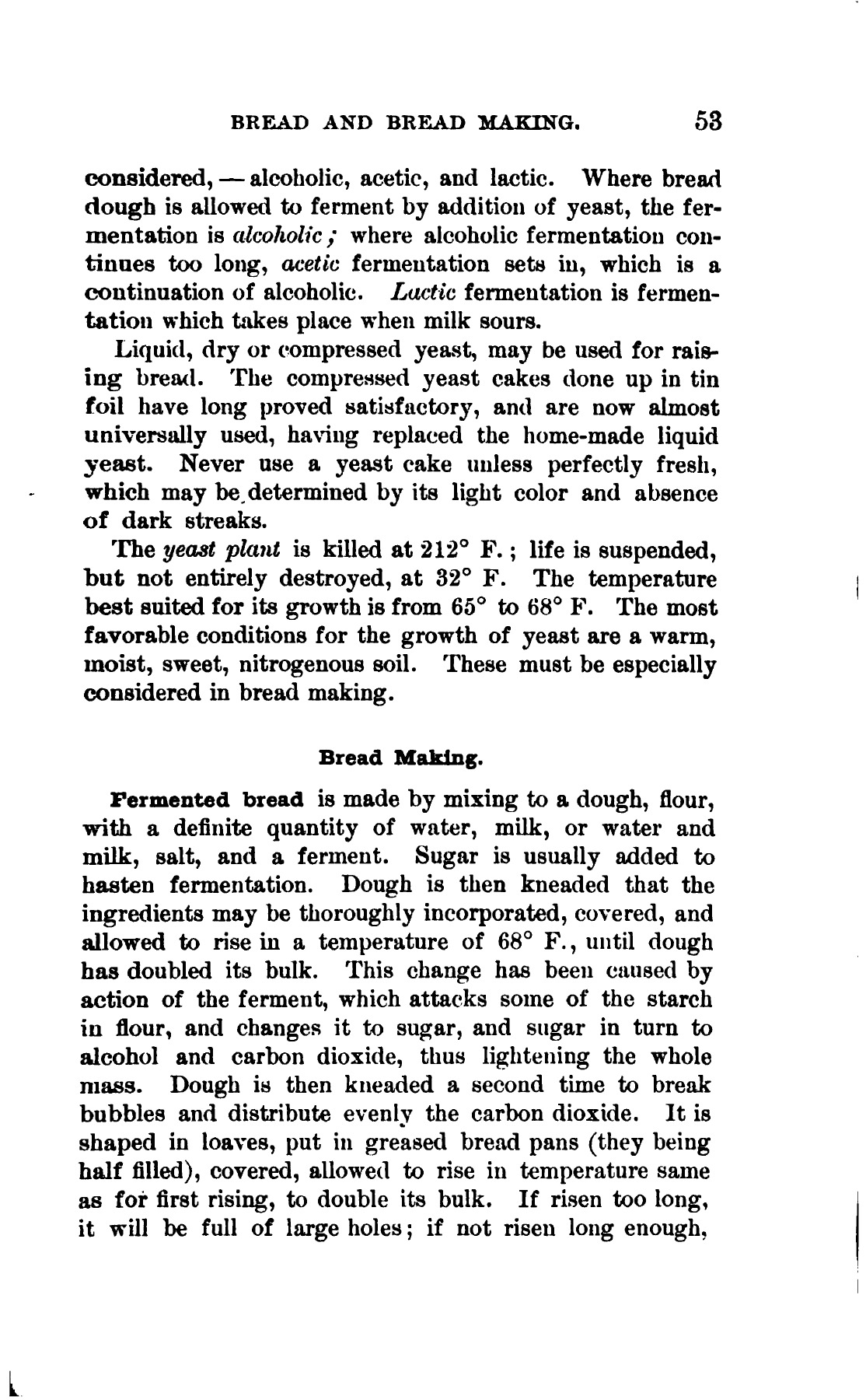
In Fannie Merritt Farmer's 1896 Boston Cooking-School Cook Book, the answer begins with a wrapper. Her bread chapter describes compressed yeast cakes sold in tin foil. Elsewhere, historical cooks used dried yeast cakes, too. The word identified a portion you could break up and count, but it didn't supply a universal weight or tell you everything about the yeast inside.
To understand an old instruction, follow the product and the timetable together. A small piece left overnight and a whole cake used for bread baked that day can belong to the same perfectly deliberate system.
The cake came with its own assumptions
Farmer lists liquid, dry and compressed yeast as possible bread leaveners, then singles out the foil-wrapped compressed cakes. She describes them as having largely displaced homemade liquid yeast.
The packaging makes the ingredient unusually easy to picture. A cook could open a cake, take a fraction and put that portion into the dough. Farmer also expects the cook to judge its condition: she wants fresh yeast, light in color and without dark streaks. The counted ingredient is perishable, and its usefulness depends on more than its size. Farmer, Boston: Little, Brown, and Company, 1896, p. 53.
That context helps when a recipe list simply says “yeast cake.” The author may have explained the ingredient several pages earlier. Read the bread chapter's opening discussion before treating the short list as a complete definition. A brand name, a wrapper description or an instruction to use compressed yeast can settle a question that the recipe itself leaves open.
One book gives a weight
Charlotte Chatfield's Home Baking, a USDA bulletin revised in December 1931, offers a useful explicit example. Its standard bread proportions list one ounce of yeast as two cakes. For that formula, one cake therefore means half an ounce, about 14 grams.
That half-ounce figure belongs to the bulletin's stated proportions, followed immediately by its straight-dough method using compressed yeast. Chatfield, Home Baking, Farmers' Bulletin 1450, revised December 1931, p. 4.
Compare that with Fleischmann's present-day FAQ, which describes household fresh-yeast cakes in two sizes: 0.6 ounce and 2 ounces. Both carry the same name. A direction to use one cake would mean very different quantities depending on which package the writer had in mind. The manufacturer's FAQ is useful for its specified products; it doesn't identify Farmer's cake retrospectively.
A gram figure becomes useful once the source has established the weight. Starting with the word “cake” and attaching a modern package weight reverses that order.
More yeast bought a shorter wait
Farmer's instructions show why even an identified cake isn't the whole answer. For bread left to rise overnight, she allows a quarter of a yeast cake to a pint of liquid. For bread mixed and baked during the day, she calls for a whole cake, sometimes more, to the same pint. Those directions appear across pages 54–55.
The change is substantial: four times the counted yeast before the extra she sometimes allows. It also has a reason in the text. The smaller portion has the night to work; the larger one serves the shorter daytime schedule. Farmer tells the cook to watch dough made with plenty of yeast and attend to it when it doubles in bulk.
A handwritten recipe may appear to use surprisingly little yeast. Look for an overnight sponge or a long first rise before deciding that the quantity is a mistake. Conversely, adding a larger modern portion while keeping an overnight schedule changes more than a unit on the ingredient list. The amount and the waiting time were written to work together.
Dried cakes had a different method
Chatfield makes another distinction that the word “cake” can hide. Her bulletin describes yeast sold in both dry and compressed cakes. Dry cakes kept better, she explains, but took longer to raise bread. Fresh compressed yeast was convenient when available in good condition and spoiled more readily. Home Baking, pp. 3–4.
Her dried-yeast instructions have their own heading and preparation. The cake is broken up and soaked until soft, about half an hour, before being mixed into a sponge. She recommends beginning the sponge early in the morning or the night before baking. Home Baking, p. 6.
Those are historical dried cakes, described through their own handling and schedule. Recognizing the word “dry” doesn't establish that a modern packet should be used cake for packet. Equally, a soaking instruction alone isn't enough to identify the product: modern fresh yeast can also be softened in water. The clearest evidence combines the author's ingredient name, explanation and method.
Choosing a replacement today
First establish whether the recipe means compressed or dried yeast, then look for a stated cake weight. Check introductory chapters, equivalent-measure tables and any named manufacturer's instructions from the relevant edition. Keep the recipe's sponge and rising schedule beside that information.
Once you've identified a fresh-yeast quantity, use the current manufacturer's directions for the replacement you actually buy. Fleischmann's FAQ, for example, gives one dry-yeast packet for its 0.6-ounce cake and three packets for its 2-ounce cake, and directs readers to follow the substituted product's package instructions. Those are named product equivalents, not a conversion for every historical cake.
If the old book never gives a weight, preserve that gap in any adaptation rather than publishing a guessed gram quantity as an original measure. Farmer's foil wrapper identifies a product form; Chatfield's paired ounces and cakes establish a weight.