 Forgotten Kitchen
Preserving Food
What were potting and salting?
Potting and salting prepared meat or fish for later use. Potting often turned cooked meat into a seasoned paste under a layer of fat; salting used dry salt or a salt pickle, or brine.
- Food preservation
- Salting
- Potted meat
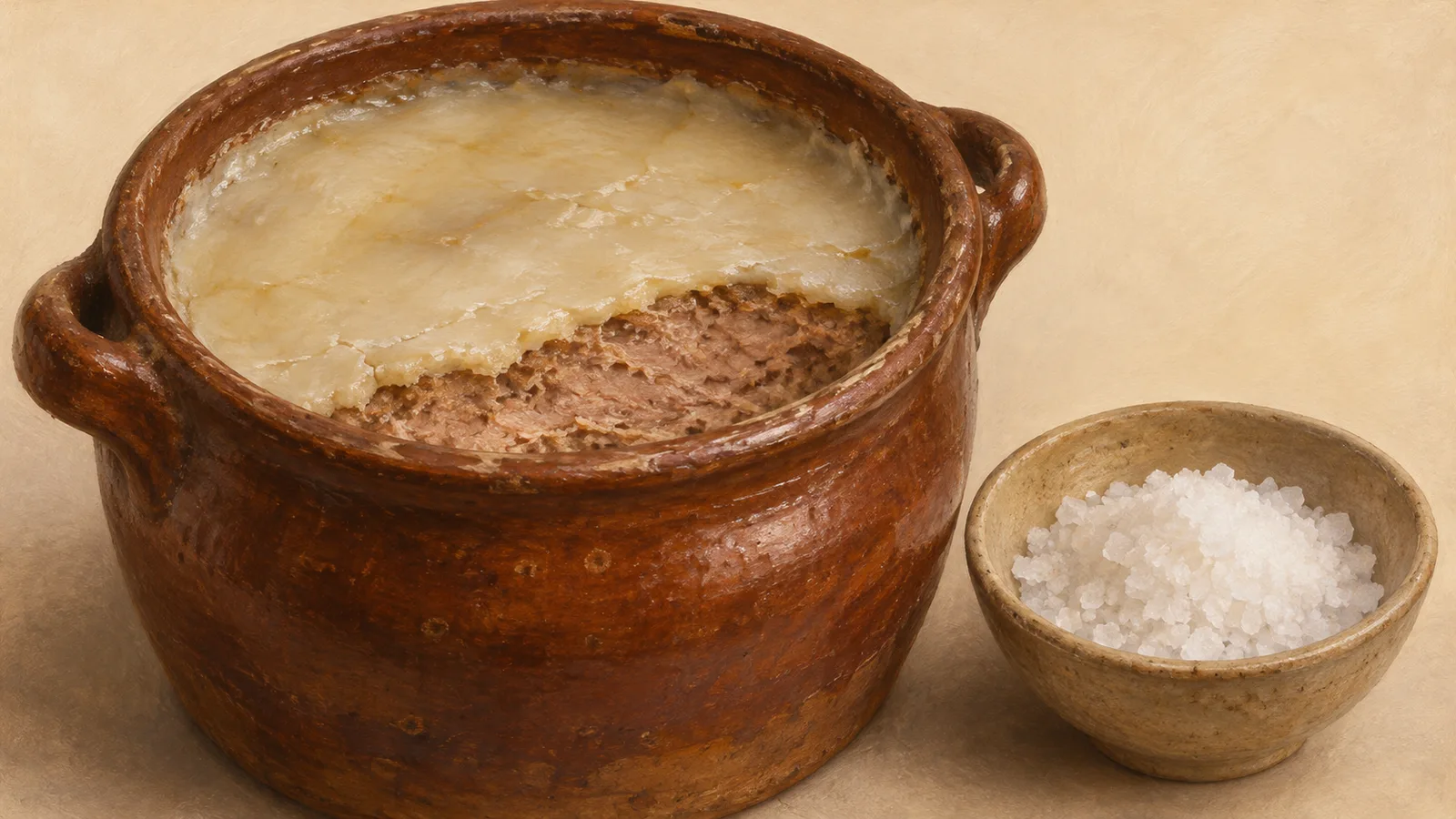
These historical methods are not modern instructions for making shelf-stable food. A layer of butter does not make meat safe to store at room temperature. For food prepared today, follow current handling and refrigeration guidance. USDA distinguishes bacteria that spoil food from those that cause illness: harmful bacteria need not change its taste, smell, or appearance. The CDC directs home preservers to current USDA instructions and warns about improperly preserved low-acid foods, including meat and fish. USDA, cooked-beef guidance · CDC, home-preserved foods.
In Isabella Beeton's fish chapter, keeping food began with a tempting purchase. When fish was cheap and plentiful, she suggested potting, pickling, or salting the surplus. Buying more than the next meal required could therefore bring a second round of kitchen work. There were ingredients to supply, vessels to fill, and decisions about what the food would become. Isabella Beeton, The Book of Household Management, 1861, §220.
From pieces of beef to a breakfast dish
A pot of meat could conceal considerable effort. In Culinary Chemistry (1821), Fredrick Accum described cooked meat reduced to a paste with salt and spices, with butter or lard covering its surface. He explained the fat as a barrier intended to keep air from reaching the meat. Cooking, pounding, seasoning, and packing all sat behind the finished pot. Accum, Culinary Chemistry, London: R. Ackermann, 1821, pp. 218–219.
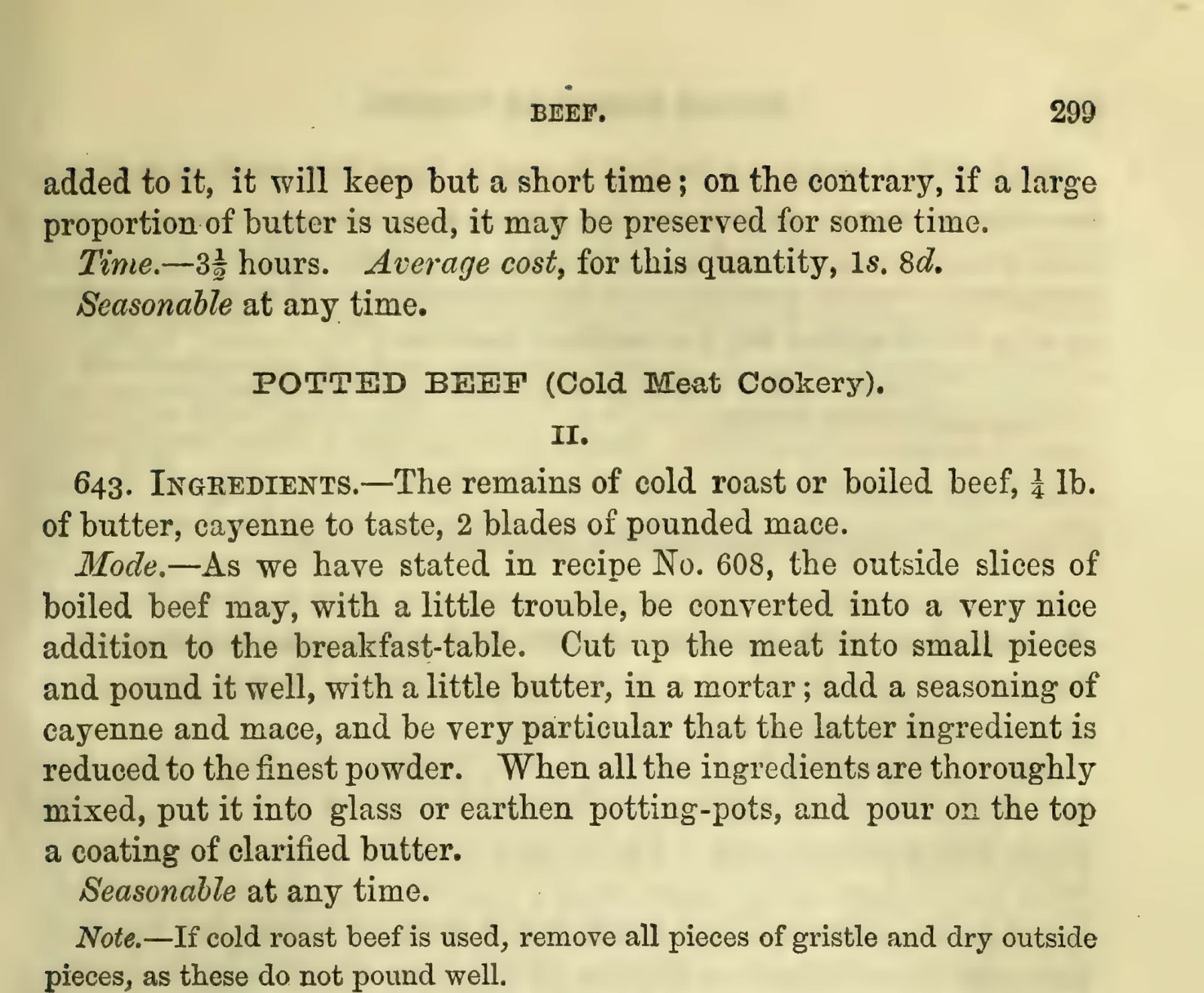
Beeton's two potted-beef entries approached that form from different starting points. The first called for fresh beef cooked especially for the preparation. The second belonged to cold-meat cookery and used the remains of roast or boiled beef. She proposed the latter for the breakfast table. A piece left from one meal could return as a spread with its own place in another. Beeton, 1861, §§642–643.
The mortar mattered. Beeton singled out gristle and dry outer pieces because they wouldn't pound well. Her concern was with the texture the cook could make from the available meat. The remains of a roast were a starting material, but they still needed choosing and working before they became potted beef.
Butter, seasonings, pots, and labor also belonged to the calculation. This version of household economy asked someone to turn usable pieces into a different preparation. Beeton's separate entries keep the distinction clear: potting wasn't simply another word for using leftovers, since a cook might also begin with meat bought and cooked for the purpose. Beeton, 1861, §§642–643.
Salt changed what would reach the table
Accum opened his discussion of preservation with uneven supply: abundance in one season or place could answer scarcity in another. Keeping food promised a way to bridge that gap. Yet his treatment of salting repeatedly considered what happened to the meat along the way. Accum, 1821, pp. 182–185.
He distinguished rubbing with dry salt from immersion in brine. In his judgment, brine gave a more delicate result, while dry salting offered longer keeping. He also separated appearance from eating quality. Saltpetre could improve the red color, he wrote, while making meat harder and harsher to taste. A more attractive piece of meat wasn't necessarily a more tender one. These are Accum's assessments of the preparations he discussed, rather than results from a modern comparison. Accum, 1821, pp. 185–187.
His nutritional judgments need their historical setting too. Accum believed heavy, prolonged salting reduced meat's food value and digestibility. That belief tells us what concerned him; it isn't present-day dietary advice. He was weighing the advantage of keeping meat against changes he thought made it less desirable to eat. Accum, 1821, pp. 182–185.
Accum disputed the supposed need to remove every gland, citing a professional dry salter. He discussed the belief that forceful rubbing helped salt penetrate, then emphasized the importance of exposed cut surfaces. Accum, 1821, pp. 184–187.
What did a promise of keeping mean?
Beeton's first potted-beef entry tied keeping to the mixture. More gravy shortened it, she said; a larger proportion of butter extended it. These claims help explain why an old recipe might pay close attention to the fat covering or the amount of liquid. They don't establish safe storage conditions for meat made today. The words describe Beeton's expectations, without providing a modern preservation standard. Beeton, 1861, §642.
Accum's account of heat-preserved meat shows how uncertain explanations could be even within a confident technical book. He examined a theory about oxygen, then called it hypothetical and unsatisfactory. His discussion of keeping food reached beyond salting and potting into the question of why decay happened at all. Accum, 1821, pp. 214–218.
Preserved beef behind a shop name
Households could also buy food that had already undergone this work. A London advertisement dated January 1, 1788, placed Dutch beef among smoked salmon, hams, and other provisions at Burgess's Warehouse. It listed Hambro' beef separately, with ribs and rolls intended for grating. The assortment offered recognizable names and forms, rather than one undifferentiated category of preserved meat. Times, or Daily Universal Register, January 1, 1788, fourth sheet, column 3, reproduced in Henry Sampson, A History of Advertising, 1874.
The notice survives here through Sampson's later reproduction. It tells us what Burgess advertised, including the distinction between Dutch and Hambro' beef. It doesn't explain the warehouse's process or establish where the English product name began.
Beeton later included “The Dutch Way to Salt Beef,” involving salting, smoking, and pressing. Her recipe gives a cookbook account of a preparation bearing that name, not a key to Burgess's earlier stock. The two sources meet at the name while leaving the making in different hands: one describes kitchen work, the other offers a finished provision for sale. Beeton, 1861, §661.