 Forgotten Kitchen
Measures & Ovens
What is a slack oven?
Puff pastry in a slack oven could stay sodden, pale and flat. Yet a slacker oven was just what Isabella Beeton wanted for pastry covered in icing. Gentle heat could spoil the pastry or save its finish, depending on when it was used.
- Oven heat
- Pastry
- Baking
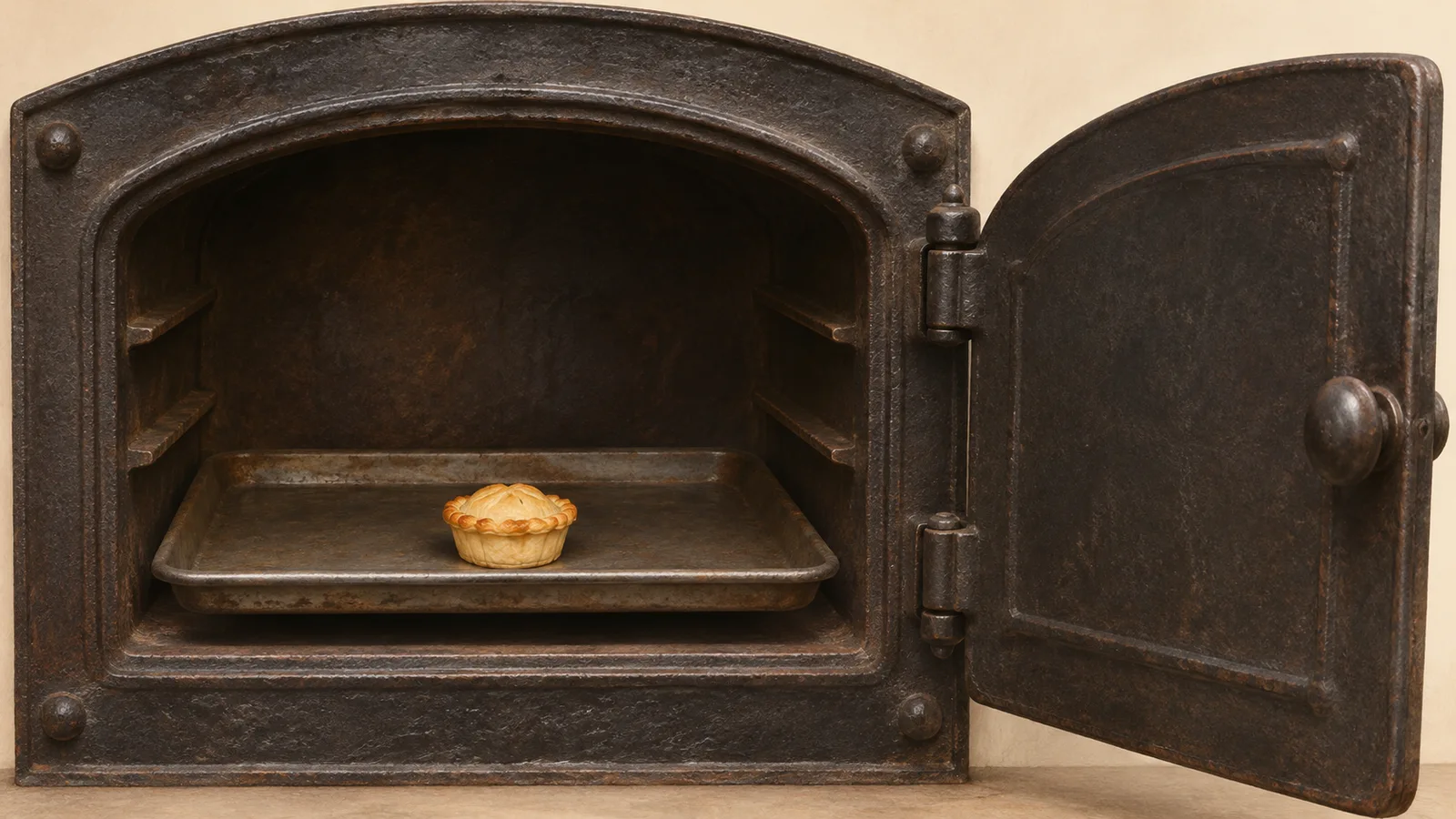
A slack oven meant an oven at gentle heat. That answers the vocabulary question, but it doesn't tell a modern cook where to turn the dial. The old instruction belongs beside the food: what had to rise, what needed to color, and what might scorch before the rest was ready. Beeton's pastry advice makes those decisions unusually clear.
First the pastry, then the icing
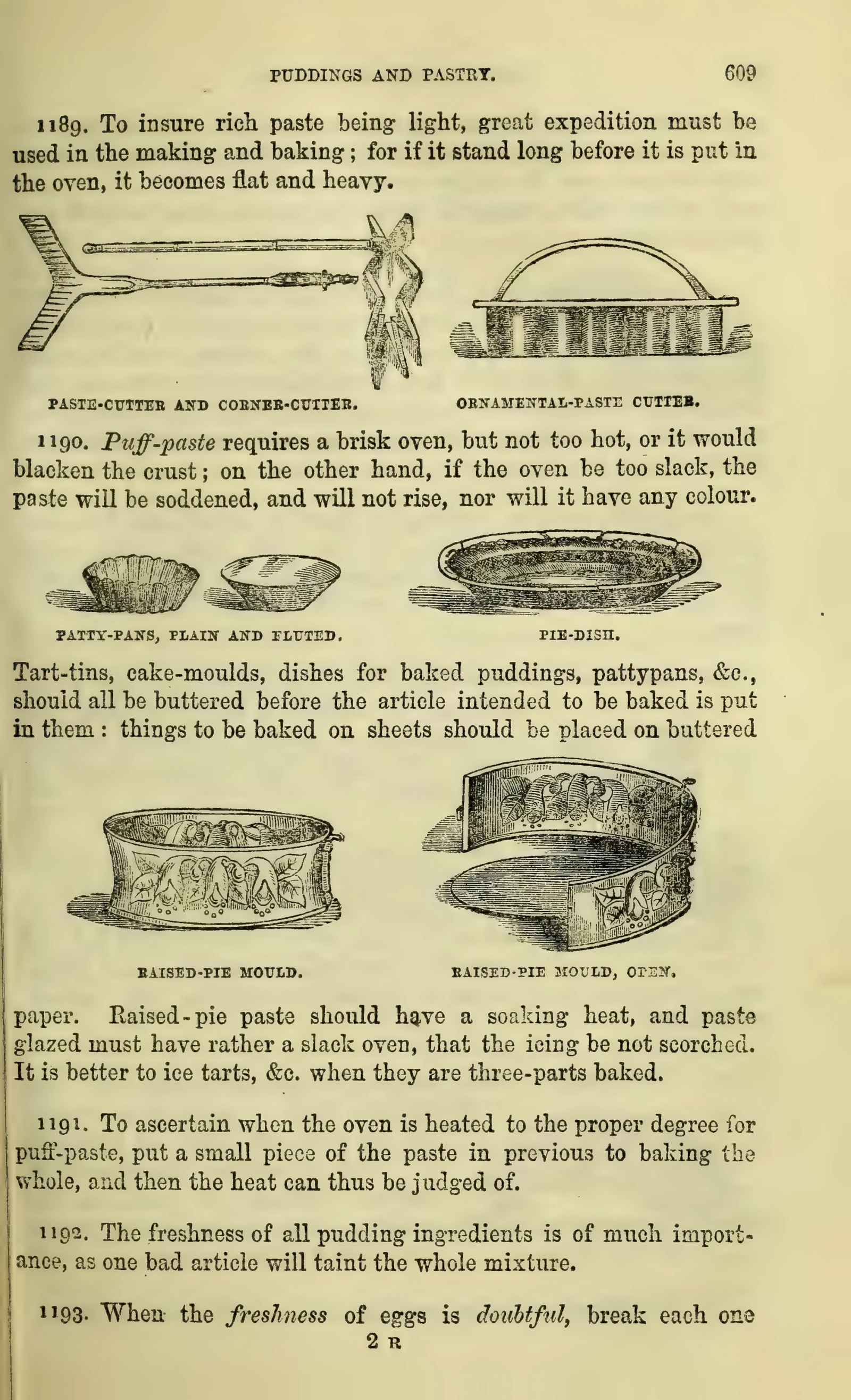
In the 1861 Book of Household Management, Beeton calls for brisk heat for puff pastry. Too much heat would blacken the crust; too little would leave it sodden, without rise or color. Her description gives the cook several things to watch. A pale surface alone wouldn't tell the whole story if the pastry underneath had also failed to rise.
Icing created another problem. A hot oven could scorch the finish, so glazed pastry needed slacker heat. Beeton suggests icing tarts when they're three-quarters baked. By that point, the pastry has already had much of its baking; the newly added surface needs protection. Her advice in §1190 follows the changing needs of the tart rather than assigning one heat to everything called pastry.
If you're adapting a recipe, keep a late glaze or icing beside its oven instruction. Moving the finish to the start would expose it to the heat intended for the pastry underneath.
The little piece that went in first
Beeton follows that discussion with a small precaution: put a piece of puff pastry into the oven before committing the whole batch. In §1191, the trial piece helps establish whether the heat is suitable.
It's a revealing choice of test. The sample is made of the very food about to be baked. Its response connects the oven to the rise and color Beeton has just described. A failed scrap costs less than a failed batch, and it answers a narrower question than “Is this oven hot?” It asks whether this oven is ready for this pastry.
Fifteen minutes could mean different heat
Amelia Simmons gives another useful comparison in American Cookery (1796). Her coriander cookies bake for fifteen or twenty minutes in a slack oven. Her molasses gingerbread gets fifteen minutes in brisk heat, with a warning against scorching. Similar baking times accompany noticeably different directions.
The mixtures help distinguish the jobs. For the cookies, Simmons combines butter and coriander with a cooled sugar syrup and pearl ash dissolved in milk. The gingerbread uses molasses and pearl ash dissolved in water, is kneaded stiff, and receives a wash of beaten egg whites and sugar before baking. These are two separately prepared doughs, with different ingredients and surface treatment. Simmons's “Cookies” and “Molasses Gingerbread” leave those details alongside the heat words.
Neither the shared leavener nor the overlapping times makes the oven instructions interchangeable. When reading an unfamiliar recipe, it's tempting to seize on a familiar number and work backward. Here, fifteen minutes can't tell you what slack meant. The dough, its preparation and the intended result still need attention.
A damper was part of the decision
Fannie Merritt Farmer's 1910 revised Boston Cooking-School Cook Book describes a cooking stove through its firebox, grate, ash space, oven and passages for circulating hot air. Dampers governed the air supply and the route heat took toward the oven or chimney. Her “Fire,” pp. 16–17, gives the heat words a set of working controls.
A cook using that range had to manage the fire and understand where its heat was going. Farmer also distinguishes a portable range, often equipped with a lower warming oven, from a set range built into a fireplace. Even the place called an oven sat within a larger arrangement of fire, passages and cooking spaces. A recipe's brief instruction depended on knowing that arrangement.
For a modern adaptation, first collect what the recipe actually tells you: the mixture, its shape or surface treatment, the baking time, any change of heat, and the signs of completion. Keep “slack” in that record. Choosing a numerical setting comes afterward; none of these examples establishes a universal Celsius or Fahrenheit conversion.
TuneMyRecipe's guide to slow, moderate and hot oven temperatures compares later published ranges for that next step. If the equipment itself is unfamiliar, our Dutch oven history follows heat through covered pots, fire-facing ovens and a cheese toast whose topping has to brown.