 Forgotten Kitchen
Equipment
How Hand-Cranked Ice-Cream Freezers Worked
A hand-cranked ice-cream freezer cooled a food vessel while a moving vessel or scraper kept the freezing mixture in motion. Ice and salt belonged to the surrounding cooling apparatus, separate from the cream. The handle helped incorporate the frozen layer as it formed against the metal.
- Ice cream
- Freezing
- Equipment
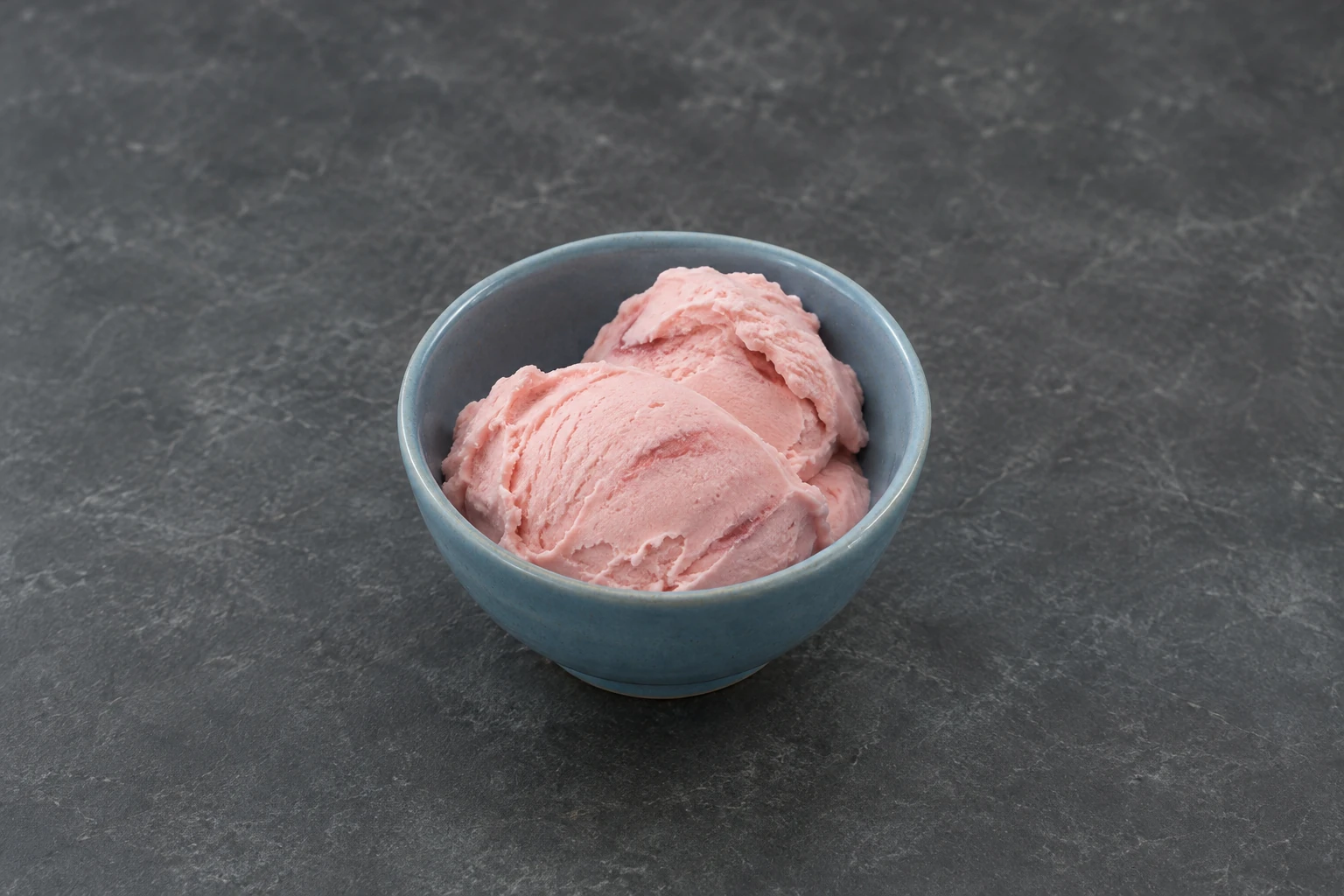
Follow the moving parts
Thomas Masters's 1844 Ice Book describes a double-motion arrangement in which the freezing vessel turns while a fixed spatula removes the frozen material from its sides. The flakes return to the mixture rather than remaining as one solid wall. Masters connects that action with a more uniform result, arguing that freezing and beating need to happen together.
His book also describes a simpler model in which those operations cannot occur simultaneously. The distinction matters when looking at an old freezer illustration. A handle, a wooden pail and a food vessel do not establish exactly which part moved or how the scraping was done. The operating directions identify the mechanism more precisely than the general name. Masters, The Ice Book, pp. 69–81.
Loading the double-motion apparatus was its own sequence. The vessel was fitted to its spindle, refrigerant was packed around it and settled, and the prepared mixture was poured in. The scraper and covers were then secured. The crank began its work after those preparations. Refrigerant outside the vessel and liquid inside it occupied different spaces and had different purposes.
What happened in four minutes?
Masters reprinted a favorable account attributed to the Mechanics' Magazine of February 10, 1844. It reports a witnessed batch of two and a half quarts in less than four minutes, then projects thirty quarts in an hour with allowance for emptying and refilling. The single reported batch and projected hour are different pieces of evidence. Masters, pp. 172–174.
The reprint leaves several useful cooking details unspecified: the formula in that batch, its starting temperature, separate setup time and the conditions at the end of freezing. It gives a striking demonstration without furnishing a timetable for every home recipe. The fruit mixtures below come from elsewhere in Masters's book; they are not identified as that demonstration batch.
A machine's capacity also refers to more than the amount poured into it. Its vessel needs room for the mixture as it freezes and is agitated. For a modern recipe, the actual maker's filling limit takes precedence over an old book's stated quart of finished ice cream. Divide a mixture into separately chilled batches when necessary.
A later freezer put the ice underneath
Agnes Marshall's Cookery Book makes another arrangement unusually visible. The twenty-fifth-thousand copy is undated on its title page and cataloged as 1894. Its freezer advertisement promises ice in three minutes while describing a revolving pan and fixed internal fan. The advertised absence of packing does not mean the machine dispensed with ice or scraping.
Her directions put pounded ice beneath the pan, mixed with rough salt weighing half as much. The prepared food mixture is poured into the pan above it. After two or three minutes the cook examines progress; removal depends on sufficient freezing. The mixture must be no more than an inch deep, another condition behind the short interval. Marshall, pp. 373–374 and advertisement p. 18.
Those particular salt and depth directions describe Marshall's apparatus. They are not ingredients or universal loading instructions for the modern recipes. An intact, suitable machine and its own directions are needed if ice and salt provide the cooling. Keep the brine out of the food vessel when loading, draining and removing the finished ice cream.
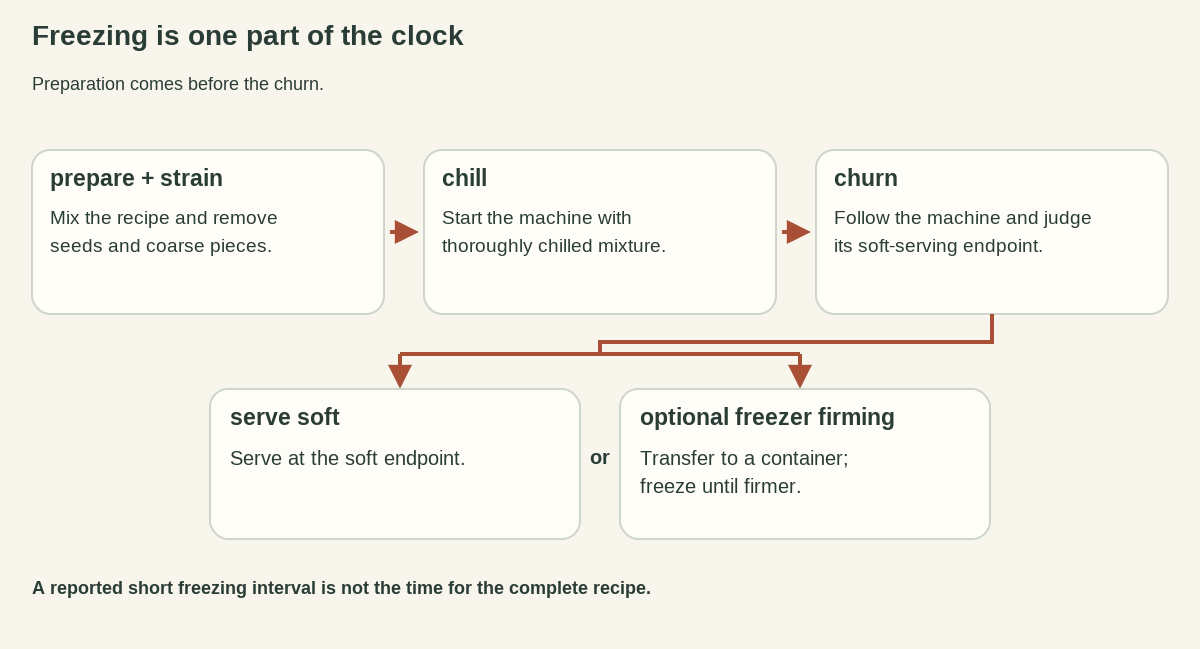
Freezing and firming were separate choices
Marshall distinguishes ice destined for a mold from ice served without molding. The first leaves the freezer at a thick-batter consistency, while the second is made firmer. A molded preparation then spends another hour and a half to two hours in a separate ice-and-salt cave. A short churn and a longer setting stage can therefore appear in the same book without describing the same task.
An icebox performs a different kind of cold work: its job is to maintain a chilled compartment, not mechanically agitate a dessert. The broader history of keeping food cold includes several such arrangements. Their vessels, refrigerants and food temperatures cannot be inferred from the word ice alone.
Shape also needs its own explanation. A molded dessert may be frozen, or it may be set with a substance such as isinglass. Masters's two fruit recipes call for freezing, with no jelly-setting ingredient. Their preparation ends at the sieve before the machine takes over.
The erratum belongs with the recipe
Masters's strawberry cream combines fresh fruit with an equal amount of jam, sugar, lemon, milk and cream. His raspberry recipe offers a jam-only preparation and a fresh-fruit alternative. The book's erratum adds a consequential instruction: strawberry and raspberry preparations require straining. That correction supplies an operation missing from the short recipes. Masters, pp. 87–88 and erratum.
The versions below retain straining and choose definite small batches. Their color comes from fruit and jam; the separate historical coloring compound is omitted. A chilled mixture, suitable modern machine and freezer now govern the work. Soft serving and firmer serving remain useful choices, each with its own waiting time.
Strawberry-and-jam ice cream
Modern adaptation. Estimated yield: 4–6 small portions, approximately 600–750 ml after churning. Allow about 15 minutes preparation, 2–4 hours chilling and the machine's freezing cycle. For planning, allow roughly 3–5 hours to soft serving with the machine ready, plus 2–4 hours freezer firming if wanted. A freezer bowl may need separate advance freezing under its manufacturer's instructions.
Ingredients
- 100 g fresh strawberries, washed, hulled and weighed after preparation
- 100 g commercially prepared strawberry jam
- 250 ml pasteurized whipping cream
- 100 ml pasteurized whole milk
- 15 ml lemon juice
- 0–10 g superfine sugar, optional, according to the jam's sweetness
Equipment: Fine-mesh sieve, bowl, whisk, refrigerator, food thermometer, a suitable ice-cream machine with capacity for this mixture and expansion, and a lidded freezer container.
Method
- Prepare the machine in advance as its manual requires. Crush the strawberries with the jam and lemon juice, then work through a clean fine-mesh sieve, leaving seeds and coarse pieces behind.
- Whisk the puree with the cream and milk. If needed, stir in some or all of the optional sugar until dissolved.
- Cover and refrigerate promptly until thoroughly chilled to 40°F (4°C) or below. The chilling estimate is a planning allowance; check the mixture rather than starting a warm batch.
- Churn under the machine's instructions and maximum-fill limit. If using an ice-and-salt machine, keep its refrigerant and drainage outside the sealed food vessel. Judge the machine's normal soft-serving endpoint rather than a historical four-minute claim.
- Serve soft, or transfer promptly to a clean lidded freezer container and freeze until firmer. Keep the freezer at 0°F (−18°C) or below and remove only the amount being served.
Adaptation notes: Masters leaves the fresh-fruit quantity and several other measures open. This version supplies the quantities while retaining equal fruit and jam and implementing the erratum. Straining losses and air incorporated by the machine affect output; the stated yield is an estimate. No historical chemical color is added.
Raspberry-jam ice cream
Modern adaptation. Estimated yield: 4–6 small portions, approximately 600–750 ml after churning. Allow 15 minutes preparation, 2–4 hours chilling and the machine's cycle, with optional 2–4 hours firming. Prepare any freezer bowl beforehand.
Ingredients
- 200 g commercially prepared raspberry jam
- 250 ml pasteurized whipping cream
- 100 ml pasteurized whole milk
- 15 ml lemon juice
Equipment: Fine-mesh sieve, bowl, whisk, refrigerator, thermometer, suitable ice-cream machine and lidded freezer container.
Method
- Mix the jam, milk and lemon juice. Pass through a clean fine-mesh sieve to remove seeds and coarse pieces.
- Whisk in the cream. Cover and refrigerate promptly until the mixture is 40°F (4°C) or below.
- Churn under the machine's capacity and operating instructions, keeping any ice-and-salt refrigerant outside the food vessel.
- Serve at the machine's soft-serving stage, or transfer promptly to a covered container and freeze until firmer at 0°F (−18°C) or below. Keep frozen until service.
Adaptation notes: This follows Masters's jam-only branch. The 200 g jam and 250 ml cream approximate the source relationship under an Imperial-pint interpretation, rather than forming an exact reduction. Milk and lemon amounts, pasteurized dairy, omitted coloring and the modern machine are specified choices. No fresh raspberries are added to this branch.
Both mixtures contain milk and no eggs. Use pasteurized dairy and clean equipment, consistent with the FDA's homemade ice-cream guidance. Refrigerate perishable mixtures promptly and follow the FDA's refrigerator, freezer and two-hour handling guidance; above 90°F (32°C), the room-temperature limit is one hour. Freezing does not make contaminated ingredients safe.