 Forgotten Kitchen
Ingredients
Why One Chapati Was Called Americanized
One bread cooks on a dry iron griddle. The next is rolled out, brushed with fat, folded and rolled again before meeting a greased surface. Mary Kennedy Core printed them side by side in her 1917 Khaki Kook Book, calling the second “Chupatties (Americanized).” The changed name came with changed instructions.
- Flatbreads
- Whole-wheat flour
- Griddle cooking
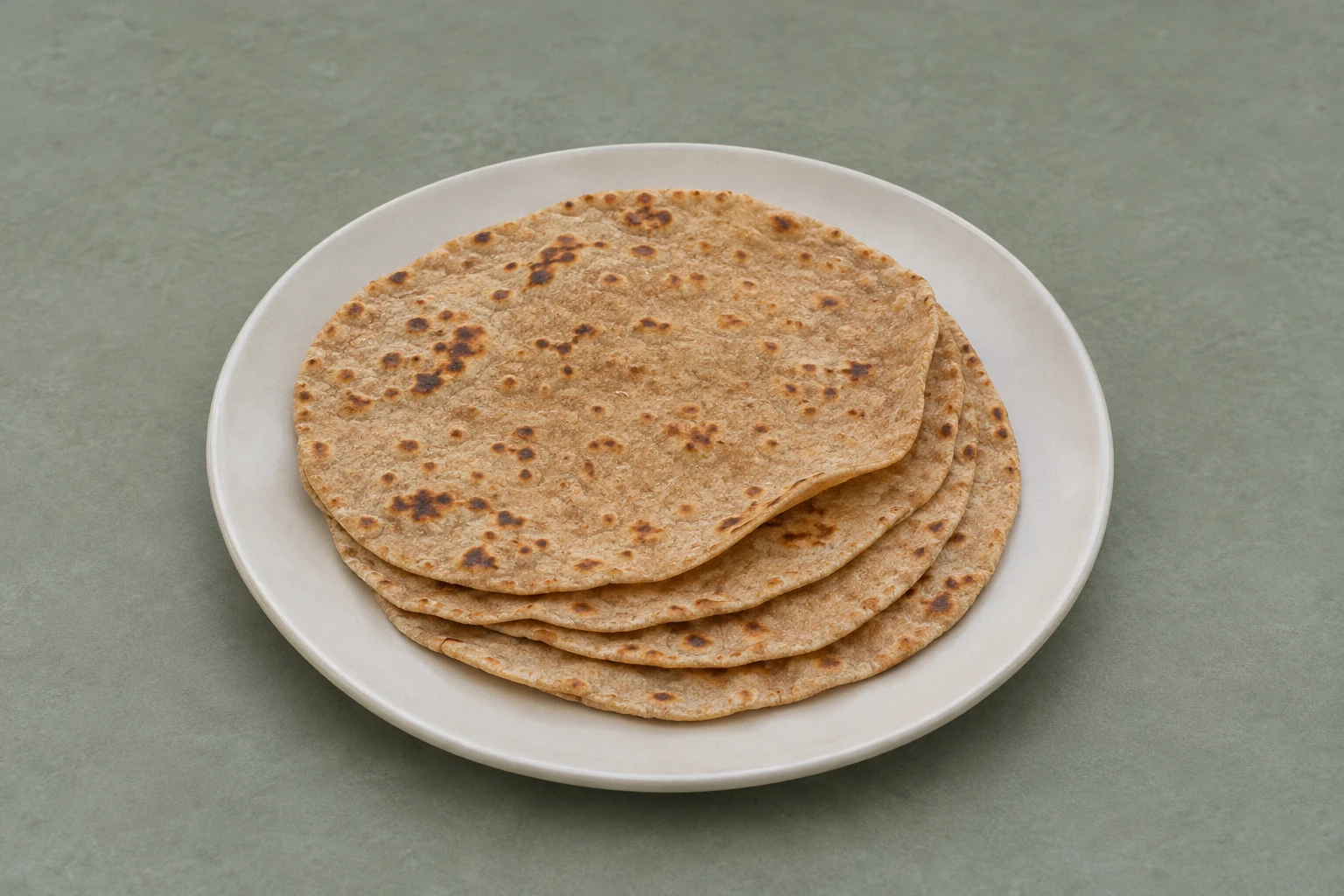
For the two adaptations below, buy plain whole-wheat flour, rather than a self-rising flour or bread mix. Both begin with flour and water. The second adds baking powder, salt and oil between folded surfaces.
The first bread starts with a rest
Core's no. 68 begins with a pound of “whole wheat” and enough water for a soft dough. Her bread chapter supports reading that ingredient as flour. She tells the cook to knead it, cover it with a damp cloth and leave it an hour or so, then knead again. Core, nos. 68–69, pp. 58–59.
Her shaping measures are objects a reader could picture: a ball as big as a walnut, flattened to a round as broad as a saucer. The breads cook individually on a well-heated thick iron griddle, with repeated turning. Cooked breads go into a napkin to stay warm; the inner pan of a double boiler is another suggested warm place. Core serves them with bujeas and curries.
Rolling and patting share one paragraph
After telling readers to roll the rounds, Core says properly made cakes should be patted into shape, a practice she attributes to Hindustani women. She offers rolling to her reader while describing hand-patting as preferable. The adaptation below follows her rolling instruction.
What Americanized changes
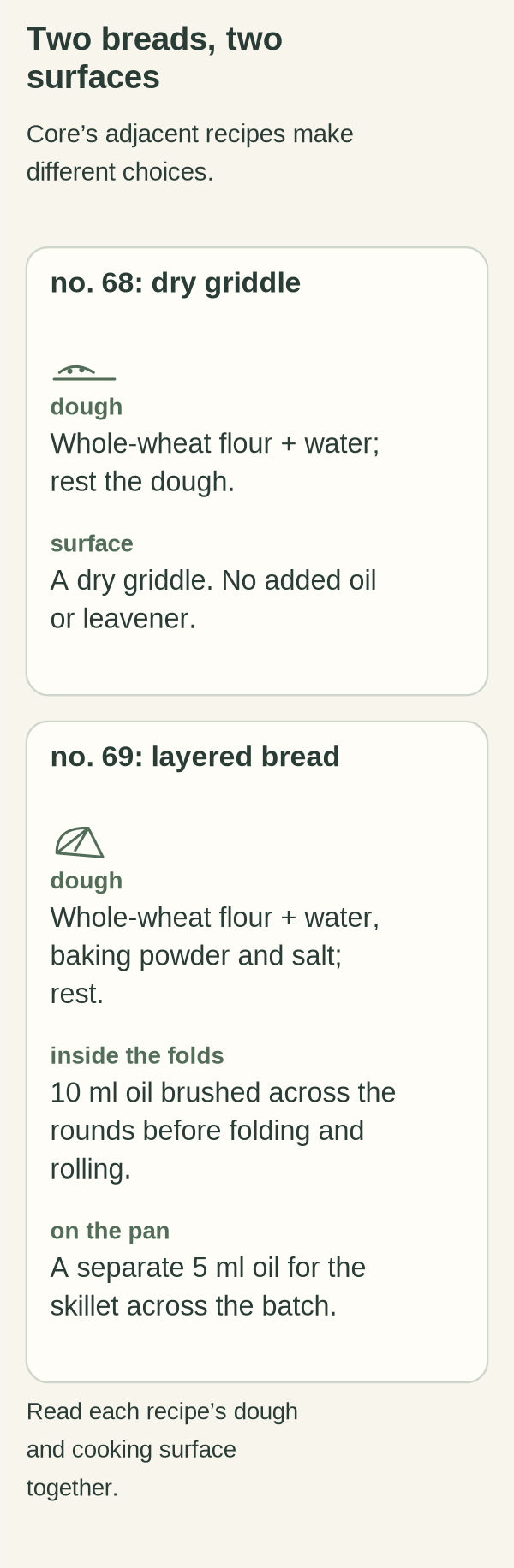
No. 69 names whole-wheat flour, adds baking powder and a little salt, and again calls for kneading and standing. Each round is spread with a little oil or Crisco, folded and rolled again; the griddle is greased too.
Oil between the folds enters the bread, while oil on the skillet prepares its cooking surface. Core explains the changes as a way to prevent the hardness she associates with the first method. She describes the second breads as griddle-cooked rather than fried, despite the added fat.
Core addresses household cooking. Her preface remembers a proposed joint cookbook with Lilavate Singh and explains that the published work differed from their earlier plan. Core, preface, pp. 3–4. Here her practical judgment appears in two adjacent recipes: keep the first surface dry, or add leavener and fat at specified stages in the second.
Keep water and rolling flour separate
Our baking-powder reference explains the measured leavener used in the second dough. Its rest doesn't require the dough to double as a yeast bread would.
Core gives no water volume for either dough. Begin with most of the measured modern allowance, then add enough of the reserve to reach a soft, workable dough. Rolling flour stays separate from the flour mixed into the bowl, so dusting the work surface doesn't use up the dough's ingredient allowance.
Dry-griddle whole-wheat chapatis
Modern adaptation. Estimated yield: 8 small breads, 4 side portions. Estimated time: 20 minutes preparation, 1 hour resting and 20 minutes batch cooking; about 1 hour 40 minutes total.
- 225 g plain whole-wheat flour for the dough
- 150 ml water, divided into 130 ml and 20 ml, plus up to 15 ml more only if needed
- Up to 10 g whole-wheat flour for rolling
Equipment: Bowl, clean cloth, scale, rolling pin, heavy 10-inch skillet and spatula. A metric teaspoon is 5 ml.
- Mix the 225 g flour with 130 ml water. Add the reserved 20 ml gradually until a soft dough forms. If still dry, add extra water a teaspoon at a time, using no more than the additional 15 ml. Knead for about 5 minutes until cohesive. Cover with a clean damp cloth and rest for 1 hour.
- Knead briefly, then divide into 8 equal pieces. Roll each into a thin round about 15 cm across, using only enough of the rolling flour to prevent sticking. Keep waiting pieces covered.
- Heat the dry skillet over medium-high heat. Cook one round at a time, turning about every 30 seconds, until both surfaces have brown spots and no raw, sticky dough remains in the center. Allow roughly 2–4 minutes per bread; reduce the heat if the outside scorches before the center cooks.
- Wrap each cooked bread in a clean dry cloth while finishing the batch. Serve warm. Do not taste raw dough; FDA's flour guidance explains why flour needs cooking.
Adaptation notes: The flour is approximately half Core's pound, rounded to 225 g. Water, rolling allowance, count, dimensions, kneading time and skillet timings are supplied choices. Rolling selects one of her stated shaping approaches; the warm cloth replaces her alternative double-boiler arrangement. No oil or leavener is added.
Americanized layered griddle breads
Modern adaptation. Estimated yield: 8 small breads, 4 side portions. Estimated time: 20 minutes preparation, 30 minutes resting and 20 minutes batch cooking; about 1 hour 10 minutes total.
- 225 g plain whole-wheat flour for the dough
- 1/4 metric teaspoon baking powder
- 1/4 metric teaspoon fine salt
- 150 ml water, divided into 130 ml and 20 ml, plus up to 15 ml more only if needed
- 10 ml neutral oil for brushing the rounds
- 5 ml neutral oil for the skillet
- Up to 10 g whole-wheat flour for rolling
Equipment: Bowl, clean cloth, scale, rolling pin, pastry brush, heavy 10-inch skillet and spatula.
- Mix the 225 g flour, baking powder and salt. Add 130 ml water, then enough of the reserved 20 ml to make a soft dough. If needed, add extra water a teaspoon at a time, up to the additional 15 ml. Knead about 5 minutes, cover and rest for 30 minutes.
- Divide into 8 equal pieces. Roll each thin, using the rolling flour sparingly. Divide the 10 ml brushing oil among the rounds. Brush one face, fold in half and then in half again, and roll back into a thin round about 15 cm across.
- Heat the skillet over medium heat. Use the separate 5 ml oil to wipe a thin film over the pan across the batch. Cook the breads individually, turning about every 30 seconds, until spotted brown and cooked through with no raw dough inside, roughly 2–4 minutes each. Lower the heat if the surface darkens too quickly.
- Keep cooked breads in a clean dry cloth and serve warm. Cook the dough fully before tasting.
Adaptation notes: Flour and baking powder follow an approximate half batch. Salt, water, oil amounts, fold pattern, rest, size and timing are supplied. Plain oil selects Core's oil-or-Crisco alternative. The two oil allowances serve different stages; neither is a deep-frying quantity.