 Forgotten Kitchen
Ingredients
Christmas Pudding Ingredients Explained
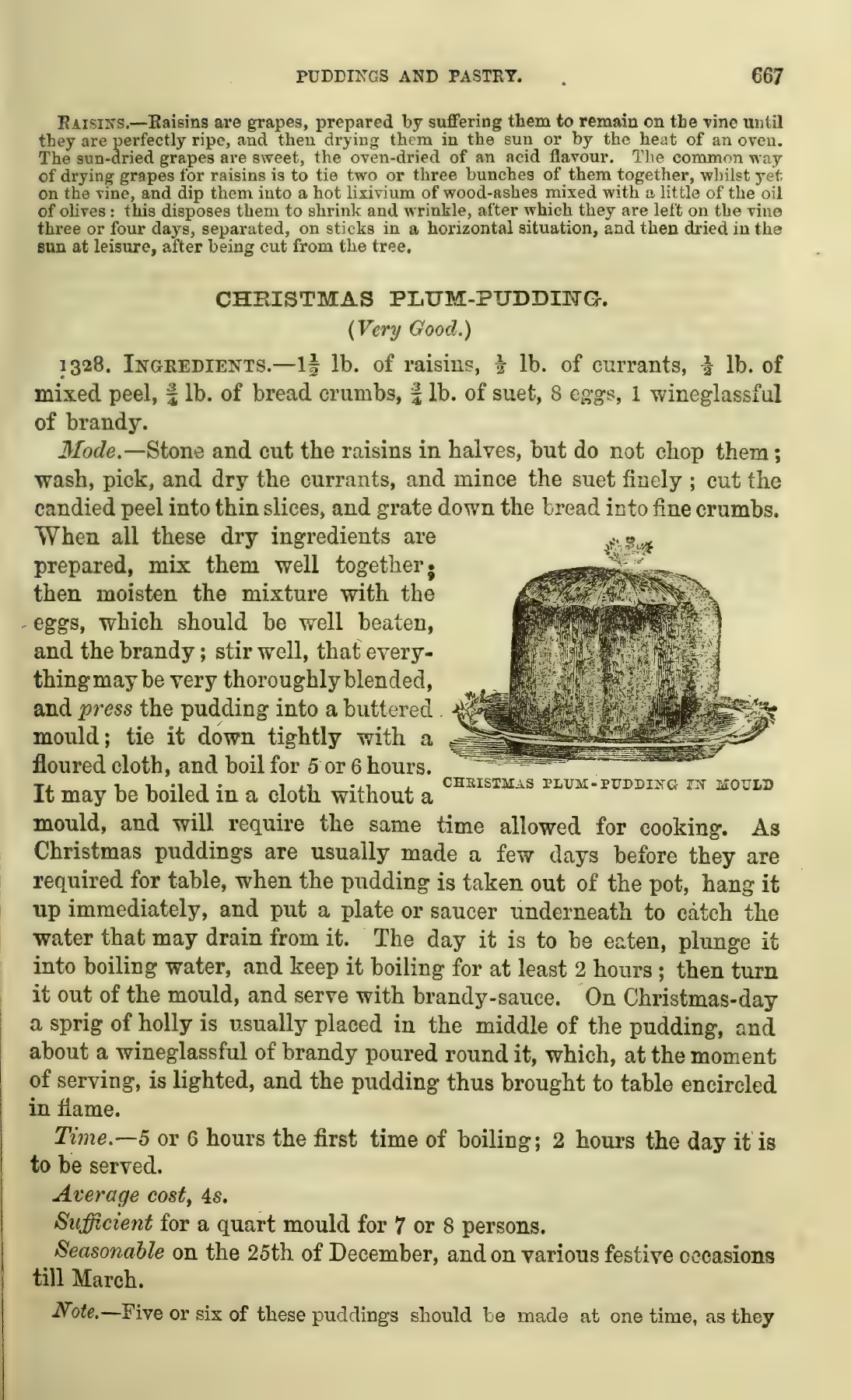
Before Beeton’s Christmas pudding reaches the basin, the raisins have to be stoned and halved, the currants washed and dried, the suet minced, the peel sliced and the bread grated. Her ingredient list is also a list of jobs.
- Christmas pudding
- Ingredient forms
- Dried fruit
That’s a good place to begin when choosing an old Christmas pudding recipe. The names tell you what to buy; the directions tell you what those purchases must become. Two puddings can share raisins, crumbs and suet while asking for quite different mixtures.
What goes into the bowl
Isabella Beeton’s “Christmas Plum-Pudding. (Very Good.)” lists raisins, currants, mixed peel, breadcrumbs, suet, eggs and brandy. Her first instruction for the raisins is unusually precise: “Stone and cut the raisins in halves, but do not chop them.” Finely chopped fruit would lose the raisin halves she specifies. Beeton, The Book of Household Management, 1861, p. 667, no. 1328.
The currants get different treatment. They’re washed, picked over and dried. The mixed peel is sliced, the suet minced finely and the bread grated into fine crumbs. By the time the eggs and brandy moisten the mixture, each ingredient has had its own preparation.
Keep those distinctions on a working ingredient list. “Mixed dried fruit” conceals the separate quantities of raisins and currants. “Breadcrumbs” leaves out the instruction to grate them finely. Even before changing an amount, it’s possible to change the pudding through the form of an ingredient.
Two Christmas puddings, two mixtures
Eliza Acton’s own Christmas pudding, published in 1845, has both flour and breadcrumbs. It also contains minced apple, sugar, candied orange rind, spice and salt alongside suet, raisins, currants, eggs and brandy. Beeton’s no. 1328 has a shorter listed mixture. Neither list supplies a rule for every pudding bearing the Christmas name. Acton, Modern Cookery, in All Its Branches, 1845, pp. 456–457.
| Ingredient | Beeton’s no. 1328 | Acton’s own Christmas pudding |
|---|---|---|
| Flour and bread | Breadcrumbs | Flour and breadcrumbs |
| Dried fruit | Raisins and currants | Raisins and currants |
| Peel | Mixed peel | Candied orange rind |
| Fresh apple | Not listed | Minced apple |
| Sugar and seasoning | No separate sugar or spice in the listed mixture | Sugar, spice and salt |
| Moistening ingredients | Eggs and brandy | Eggs and brandy |
These are different-sized recipes, too. Beeton lists eight eggs; Acton lists three. Comparing those numbers alone would miss the quantities surrounding them.
Acton’s flour and breadcrumbs each weigh three ounces. Her suet, raisins and currants each weigh six. The repetition makes the formula easy to read, but a small phrase changes how one of those amounts is measured: the raisins are weighed after their stones have been removed.
Weighing fruit first and discarding part of it afterward would leave less fruit in the bowl than Acton intended. Seedless raisins remove that particular preparation step; they don’t establish how much weight a different purchase would have lost.
Suet, peel and a glass of brandy
Suet needs attention before it’s weighed or mixed. Beeton asks for it finely minced. Acton’s separate preparation directions describe trimming and mincing beef kidney suet, then taking its weight. Our guide to suet follows that work and explains the differences between a butcher’s piece, rendered fat and a modern shredded packet.
The peel deserves the same care. Acton specifies candied orange rind, while Beeton calls for mixed peel. Fresh orange zest isn’t another way of writing either instruction. If an adaptation uses zest, it has made a new ingredient choice.
Acton’s minced apple is another difference worth preserving. It has its own four-ounce allowance, separate from the dried fruit. Her five ounces of sugar likewise belong to this formula; they aren’t an addition to carry automatically into Beeton’s list.
Then there’s the brandy. Beeton’s wineglassful looks reassuringly familiar, but the word doesn’t give that glass a modern capacity. A modern adaptation needs to state the amount it chooses. That choice should remain distinguishable from the original measure.
The marmalade variation changes several things
Acton offers a particularly revealing variation in her “Ingoldsby Christmas Puddings.” For a richer mixture, she removes half the flour and breadcrumbs and adds apricot marmalade. She also changes the liquid allowance and cooking time. The footnote belongs to the recipe as much as the main ingredient list does. Acton, 1845, p. 454.
It’s tempting to add the marmalade and leave everything else alone. Acton gives a connected set of changes. Follow the variation across the whole entry before putting it into a modern recipe.
For another branch of the pudding family, TuneMyRecipe’s carrot-and-potato plum pudding adapts a different Beeton recipe. Its vegetables and eggless mixture make it a companion to this comparison, rather than a modern rendering of no. 1328.
When choosing a pudding, keep the preparation attached to the quantity: raisins after stoning, currants after cleaning, suet in its specified form. If you choose Acton’s marmalade variation, put its changed flour, crumbs, liquid and cooking time together on the same working page.