 Forgotten Kitchen
Ingredients
What Was Suet in Old Recipes
Suet is the hard fat around the kidneys and loins of cattle and sheep. In a pudding recipe, it means a particular ingredient in a particular form. A butcher's piece of beef suet, a packet of shredded suet and a tub of rendered tallow aren't the same thing to put in the mixing bowl.
- Suet
- Puddings
- Ingredient forms
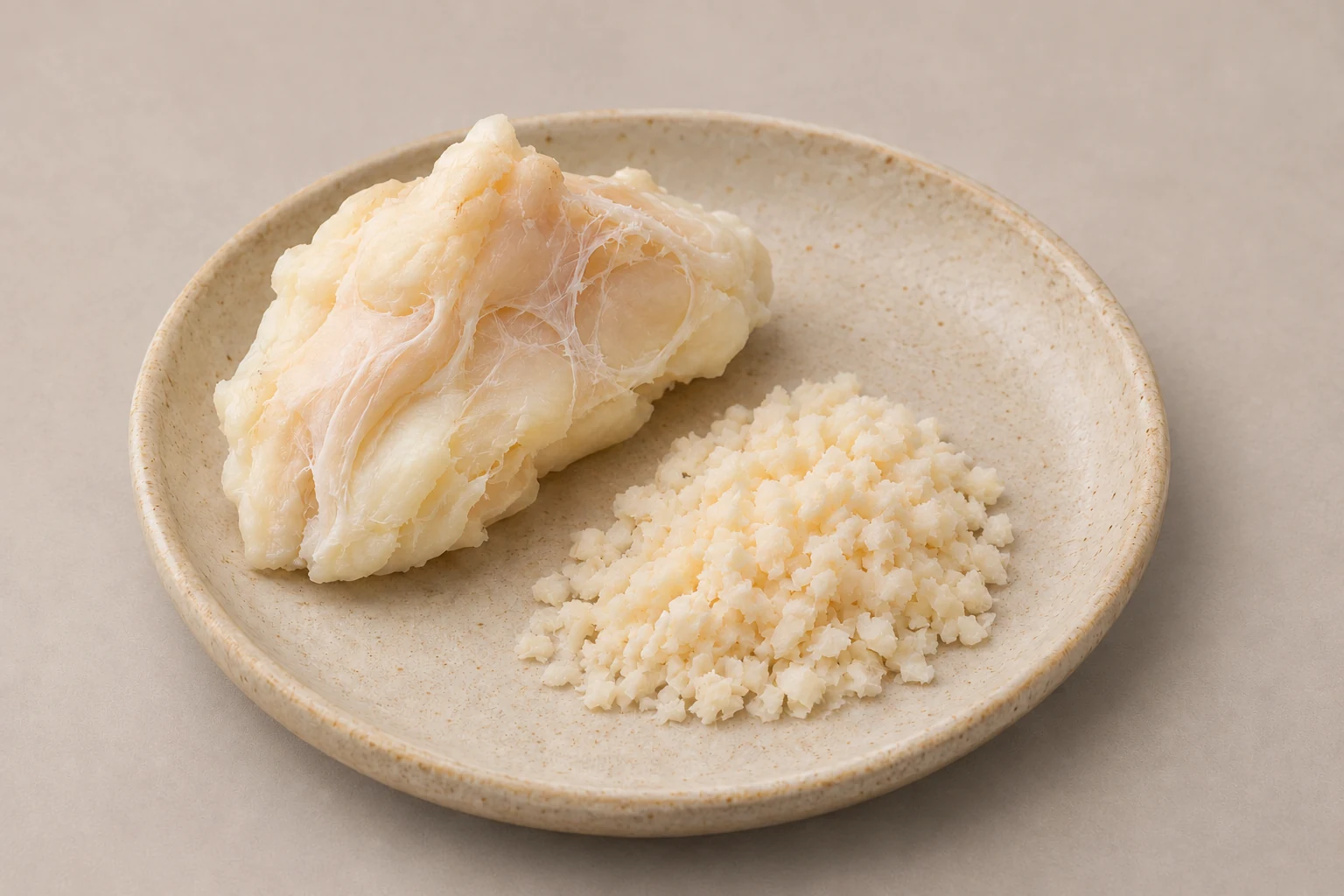
Eliza Acton makes the distinction unusually clear. Her 1845 instructions begin with fresh beef kidney suet and a sharp knife. Before the cook can measure it, there's preparation to do.
The weight comes after the knife
In Modern Cookery, in All Its Branches, Acton's suet crust is intended for meat or fruit puddings. She tells the reader to remove the skin, slice the suet thinly, remove the fiber and mince it very finely. Then comes a sentence worth carrying onto a modern shopping list: “The weight of suet should be taken after it is minced.” Acton, 1845, pp. 438–439.
Her six ounces of suet to a pound of flour therefore means prepared suet. Buying six ounces with skin and fibrous material still attached, then trimming it, would leave less for the crust. Ask the butcher for food-grade beef kidney suet and whether it has already been cleaned. Weigh the amount the recipe needs after the preparation it specifies; there isn't a single allowance for trimming every purchase.
Acton also records another technique: some cooks sliced the suet into thin shavings, mixed it with flour and used a rolling pin to incorporate the two. Even within this one account, the ingredient didn't always arrive at the dough by the same route. The recipe tells us which preparation belongs to its own method.
The fat is still being handled as an ingredient to cut and distribute through flour. Rendering it first would add an operation Acton hasn't asked for.
Butter had a recipe of its own
On the same page, Acton follows her suet crust with a butter crust. She gives eight ounces of butter to a pound of flour, compared with six ounces of prepared suet in the preceding recipe. She also discusses lard separately. Those neighboring entries are a more useful guide than treating every solid cooking fat as another spelling of suet.
Tallow is rendered fat from cattle or sheep; lard is rendered pork fat. Butter is a dairy ingredient. Their names describe differences in material and preparation before any question of substituting them in a pudding. Merriam-Webster's definitions of suet, tallow and lard preserve those distinctions.
Acton's separate formulas don't give us a universal butter-for-suet conversion. They show a writer making a different crust with a different fat allowance. If a modern recipe offers a substitute, use its quantities and handling instructions together.
A pudding didn't have to contain fruit
Christmas shopping can make suet seem inseparable from raisins and candied peel. Beeton's 1861 Book of Household Management also uses it in a plain pudding served with roast meat. Recipe 1375 calls for flour, finely chopped suet, salt, pepper, and milk or water. Once again, the cook removes the skin before chopping. Beeton, p. 690.
The finished pudding could be sliced, briefly put in the dripping pan and browned before the fire. Beeton also proposed serving it before the meat in a large family to reduce meat consumption. That was her economy advice, attached to a particular way of serving dinner, not evidence that every household obtained the same saving.
This savory example helps explain what to look for in a sweet one. The suet's preparation, the surrounding ingredients and the cooking vessel all belong to the recipe. A fruit pudding may bring eggs, breadcrumbs, flour, prepared vegetables or syrup into that mixture. Knowing the fat's name doesn't tell you how to assemble the rest.
What the modern packet changes
Commercial shredded suet removes some of the knife work, but read the ingredient list. Atora currently lists beef fat and wheat flour in its Original Beef Suet. Its vegetable product instead lists vegetable oils and wheat flour. The vegetable product is a manufactured alternative for the same kinds of cooking, not animal suet obtained from a plant. Atora beef product; vegetable product.
A flour-containing packet and a weighed portion of plain butcher's suet bring different ingredients to the bowl. That matters especially when adapting a recipe whose flour and fat have already been measured separately. It doesn't mean the packet is unsuitable: choose a recipe written for it. Check the current label for composition, allergens and storage, since a brand's formulation can change.
Keep raw suet refrigerated and follow the supplier's use-by and handling instructions. Packaged products have their own directions; don't transfer a packet's keeping period to fresh butcher's suet. The Food Standards Agency's chilling guidance explains the general cold-storage principles.
For a Christmas pudding, settle this choice before weighing the fruit. If the recipe specifies plain beef suet, buy that form or choose an adaptation that explicitly accommodates your packet. Changing the fat, flour and liquid independently can leave you following several different recipes at once.
Two puddings that use suet
TuneMyRecipe's small carrot-and-potato plum pudding, adapted from Beeton specifies plain beef suet and distinguishes it from flour-containing packaged products. Its moisture comes partly from prepared vegetables, so it also shows why the fat choice belongs beside the whole formula. It is a fruit-pudding companion, not a recipe explicitly titled Christmas pudding in Beeton.
For a Christmas recipe, The Forgotten Menu's Christmas Plum Pudding (1861) adapts Beeton's no. 1328. It combines suet with eggs, breadcrumbs and dried fruit, giving you a separate seasonal recipe to follow from the ingredient list through to the finished pudding.
Sources
- Eliza Acton, Modern Cookery, in All Its Branches, London: Longman, Brown, Green and Longmans, 1845, pp. 438–439, “Suet-Crust, for Meat or Fruit Puddings” and “Butter Crust for Puddings.” Digitized book.
- Isabella Beeton, The Book of Household Management, London: S. O. Beeton, 1861, no. 1375, “Suet Pudding, to serve with Roast Meat,” p. 690. Digitized book.
- Merriam-Webster, entries for suet, tallow and lard, for current ingredient distinctions.
- Atora, current Original Beef Suet and Shredded Suet Vegetable ingredient and handling declarations. These describe the named products, not every packaged suet.