 Forgotten Kitchen
Ingredients
Treacle, Molasses and Golden Syrup in Old Recipes
Golden syrup is pale amber and caramel-flavored; black treacle is much darker, with a bittersweet taste. Molasses comes in different products too. When an old recipe says only treacle, the useful next questions are where and when it was written, and what the syrup does in that particular mixture.
- Treacle
- Molasses
- Golden syrup
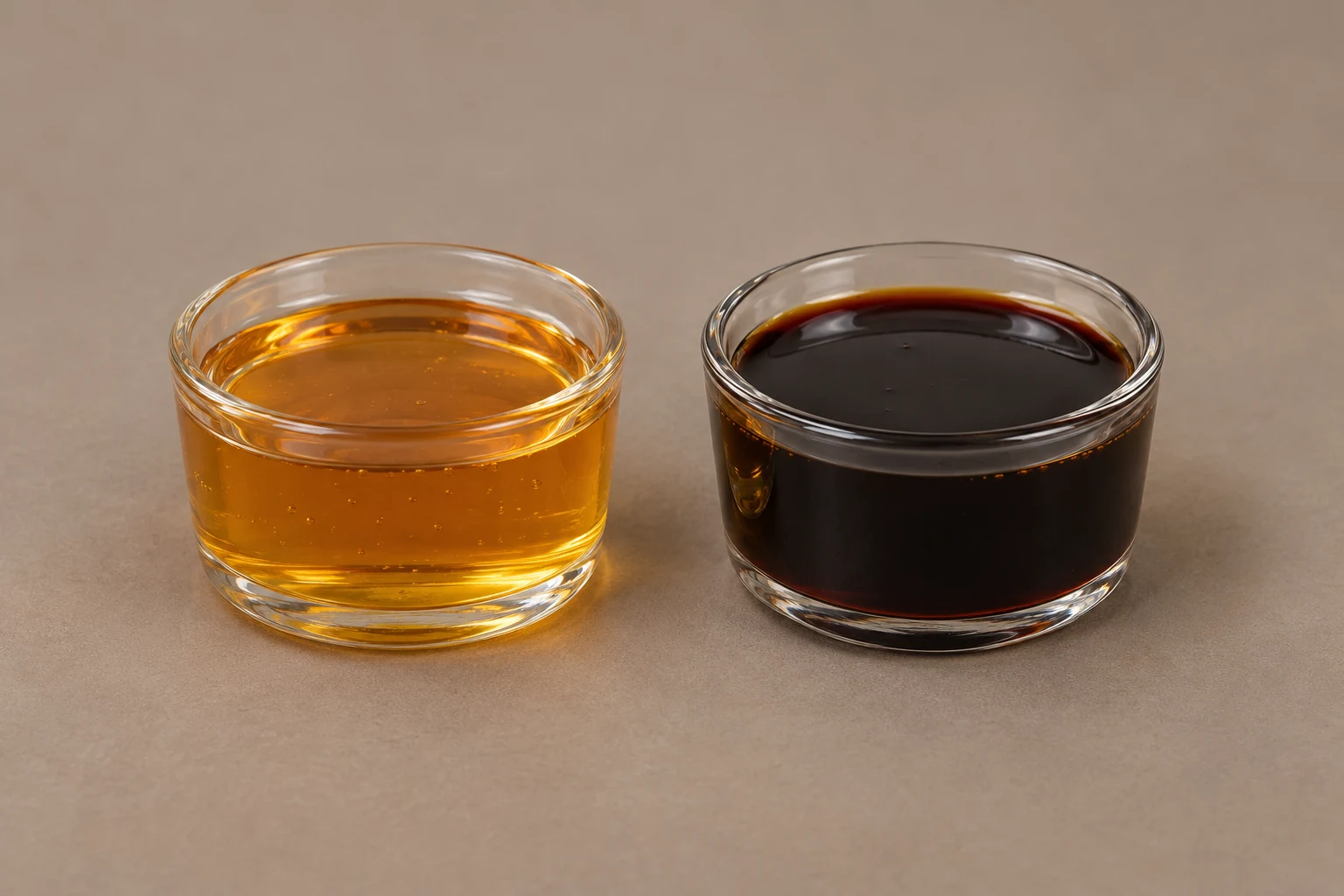
The names haven't always divided neatly. Beeton's 1861 book heads one explanation “Treacle, or Molasses.” More than thirty years later, Fannie Farmer's Boston cookbook puts molasses into several gingerbreads with different liquids and mixing instructions. Read those recipes together and the practical problem becomes clear: choosing a syrup is only one of the decisions.
Beeton used two names for the sugar-maker's syrup
The note in The Book of Household Management describes treacle as the uncrystallizable part of the juice drained from Muscovado sugar. Its heading pairs treacle and molasses, and the explanation connects the ingredient to sugar production and household use. This is how that British book presented the substance in 1861, before the familiar Lyle's tin. Beeton, p. 621.
It would be misleading to turn the heading into a rule that every product called molasses is identical to every modern black treacle. Beeton hasn't given a modern brand, a product grade or an analysis of the syrup's composition. She has given us a period meaning that overlaps the two words.
Her Thick Gingerbread makes the ingredient more concrete. A pound of treacle goes with flour, butter, coarse brown sugar, ginger and allspice. The cook warms the butter and treacle, dissolves carbonate of soda in just-warm milk, and adds previously beaten eggs. This is a substantial cake baked in a buttered tin, with an egg-yolk-and-milk glaze near the end. Beeton, no. 1760, p. 857.
The title alone wouldn't tell you any of that. Neither would a modern supermarket shelf divided into dark and golden tins.
Farmer's molasses traveled through different mixtures
In the 1896 Boston Cooking-School Cook Book, Farmer gives three neighboring gingerbreads that begin with the same allowance of molasses: one cup. What changes is everything assembled around it. Farmer, pp. 402–403.
| Farmer's recipe | Liquid and leavener in the printed formula | A consequential instruction |
|---|---|---|
| Hot Water Gingerbread | Boiling water and one teaspoon of soda | Combine the molasses and water before adding the sifted dry ingredients |
| Sour Milk Gingerbread | Sour milk and one and three-quarter teaspoons of soda | Combine the milk and molasses; the flour and fat allowances also differ from the water recipe |
| Soft Molasses Gingerbread | Sour milk, an egg and one and three-quarter teaspoons of soda | Bring the butter and molasses to boiling point, remove from the fire and beat in the soda before the remaining ingredients |
The table compares historical formulas; it isn't a set of modern substitution instructions. Farmer's soft recipe uses small tins, filled two-thirds, and gives a fifteen-minute bake. The other two go into shallow pans and bake for twenty-five minutes in a moderate oven.
So a cup of molasses doesn't identify one standard gingerbread waiting for a flavor variation. Liquid, flour, fat, egg, soda, pan and mixing sequence already distinguish these preparations. Replacing the syrup while borrowing the milk allowance from a neighboring recipe would make another formula again.
Golden syrup brought a named product into the story
Lyle's describes its golden syrup as an inverted sugar syrup, pale amber with a caramel flavor. That is a current manufacturer's description of its product. Its history dates Abram Lyle's refinery and early syrup sales to 1881 and the familiar tin to 1883. Lyle's ingredient explanation; company timeline.
The same timeline dates Lyle's Black Treacle to 1950. That is the history of the branded product, not the arrival of dark treacle in cooking: Beeton's treacle recipes were already in print in 1861. A modern tin can help you identify what you're buying now without supplying the precise identity of every syrup in an older book.
Lyle's distinguishes the darker, slightly bitter character of its black treacle from the lighter caramel flavor of golden syrup. Choose between those flavors deliberately. A recipe developed around one is a better starting point than an assumed spoon-for-spoon exchange. Lyle's comparison of the two syrups.
Read the whole recipe before choosing the syrup
First, keep any qualifier attached to the name. Golden syrup is more specific than treacle; a named modern molasses product is more specific than an unqualified historical cupful. Then read the milk, eggs and leavener before deciding which modern recipe to follow. Farmer's pages show how much can change while the molasses allowance stays the same.
Keep the recipe's measurement form too. Beeton weighs her treacle; Farmer measures molasses by the cup. Their quantities shouldn't acquire an exact common gram value simply because both syrups are sticky. A modern adaptation should say which ingredient it chose and how it defined the old measure.
For Christmas gingerbread, Lyle's publishes a golden-syrup reindeer recipe that explicitly names golden syrup among its ingredients. It is a current seasonal recipe, not a reconstruction of Beeton's cake. The named syrup, its accompanying ingredients and its method belong together.
A different application appears in Forgotten Drink's treacle posset. That adaptation selects black treacle and whole milk for an 1877 recipe whose source simply says milk and treacle. It serves strained whey and specifically excludes golden syrup. It's a drink example, not a Christmas recipe, and its ingredient choice belongs to that preparation.
On the shopping list, write down the syrup your chosen adaptation actually names. Leave the historical word in the source quotation; give the cook a specific ingredient to buy.
Sources
- Isabella Beeton, The Book of Household Management, London: S. O. Beeton, 1861, p. 621, “Treacle, or Molasses,” and p. 857, no. 1760, “Thick Gingerbread.” Digitized book.
- Fannie Merritt Farmer, The Boston Cooking-School Cook Book, Boston: Little, Brown, 1896, pp. 402–403, “Hot Water Gingerbread,” “Sour Milk Gingerbread” and “Soft Molasses Gingerbread.” Digitized book.
- Lyle's, Our Story, for its own product chronology; What Is Golden Syrup? and its black-treacle comparison, for current product descriptions. Brand history is kept distinct from the earlier ingredient names.
- Lyle's, Christmas Gingerbread Reindeer, a current product-specific seasonal recipe; Forgotten Drink, Treacle Posset, Hot Milk Turned with Black Treacle, for a different modern choice from an older source. Follow the linked recipes for their quantities and methods.