 Forgotten Kitchen
Preserving Food
What Was a Frozen Salad?
A frozen salad was a salad-course preparation firmed by freezing, sometimes inside a vegetable shell or served as a rich unmolded mixture. It was not simply another name for a gelatin salad chilled until set. Alice Bradley's refrigerator cookbook includes both a vegetable filling that the cook must stir as it freezes and a cheese mixture left undisturbed.
- Frozen salads
- Refrigeration
- Salad courses
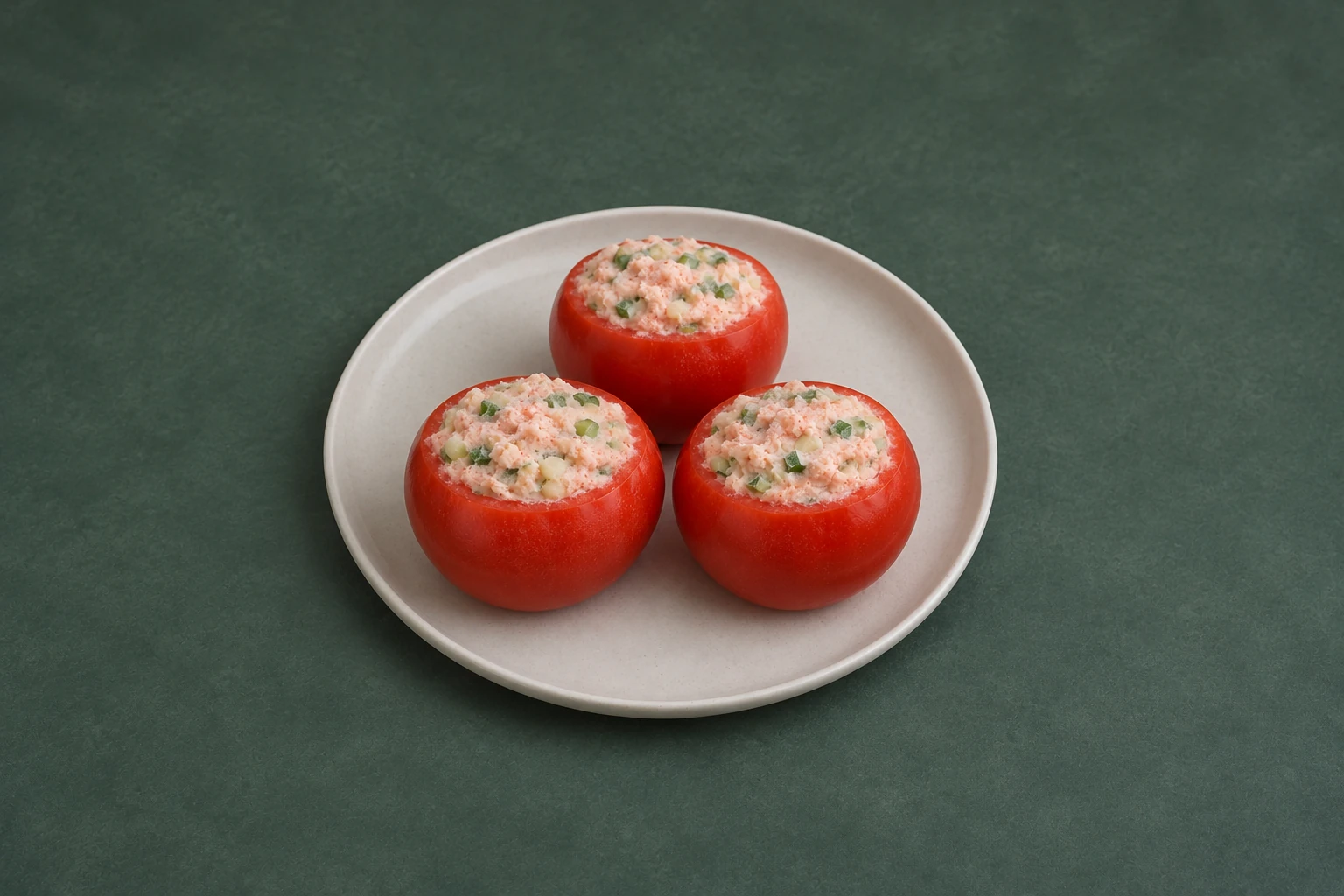
Those two dishes appear together on one page. Choosing between them also meant choosing a timetable: return repeatedly with a spoon, or complete the mixing before the pan went into the chilling unit.
Six tomatoes and several return visits
Bradley's Electric Refrigerator Menus and Recipes describes hollowing six firm tomatoes and turning their pulp, cucumber and green pepper into a seasoned filling. Gelatin, mayonnaise or tartare sauce, onion juice and Worcestershire sauce join the vegetables. The shells wait for the frozen mixture.
The gelatin does not make the freezing instruction redundant. The recipe directs the reader to Method II elsewhere in the book. Its common introduction says to put the mixture in the pan when cool. After partial freezing, the cook mixes frozen and liquid portions toward the front, returns the pan and repeats at fifteen- or twenty-minute intervals, scraping and beating smooth each time. Bradley gives two to eight hours depending on amount, with fewer stirrings allowed for cream-rich mixtures. Bradley, fourth edition, September 1928, printed pp. 44 and 67, scan leaves 48 and 71.
The pan therefore contains a changing mixture rather than a finished dish waiting passively for dinner. The cold hardens it unevenly; stirring brings the firm and fluid parts together. Hollowing the tomatoes, preparing the filling and attending the freezing are three different jobs.
Bradley supplies another stirred method too. Method I moves the mixture to a bowl for vigorous rotary beating before returning it to the pan. A later beating may follow. She judges this less demanding of the housekeeper's time than repeated spoon stirring. The book itself recognizes a choice in how to organize attention.
Cheese that could freeze undisturbed
Immediately below the tomatoes comes Frozen Cheese. Grated American cheese is beaten with cream cheese and mayonnaise. Chopped red maraschino and green mint cherries join cream that has been measured liquid and then beaten stiff. This mixture points to Method III: leave it in the chilling unit for three hours or until firm.
Once unmolded, it can receive chopped nuts or paprika and accompany the salad course. It contains neither the tomato recipe's gelatin nor its stirring dependency. The adjacency makes their contrast particularly clear: a manufacturer-backed cookbook could offer several kinds of refrigerator work rather than one universal frozen-salad technique. Bradley, printed pp. 45 and 67, leaves 49 and 71.
General Electric's Electric Refrigeration Department in Cleveland published this fourth edition in September 1928. Bradley's title page presents her as a cookery-school principal and magazine cooking editor, connecting the appliance's possibilities to an established teaching role.
Freezing a dish and holding it for service
Another manufacturer's book separates decisions about food texture from decisions about the machine. The copyright-1928 Frigidaire Recipes was prepared for refrigerators equipped with Cold Control. Its instructions have two different sets of Methods I, II and III: one concerns dial settings; the other concerns agitation of the mixture.
The dial directions distinguish ordinary preservation, freezing and holding for service. One method freezes a chilled mixture at setting four or five, then turns back to two or three to hold it. Its no-stir freezing method still refers the owner to the holding instructions. An undisturbed pan could therefore leave another decision before dinner. These setting numbers belong to that particular period manual, not to modern freezer controls. Frigidaire Recipes, printed pp. 11–14, scan leaves 15–18.
This helps explain the appeal of a demonstration. On June 24, 1929, Central Dairy in Columbia, Missouri, advertised an eight-day Cold Control event. Visitors were invited to see frozen desserts made, taste them and receive a souvenir recipe book. The offer connected equipment, something edible and instructions to take away. It does not identify those desserts as Bradley's salads or establish that the souvenir was the Frigidaire volume used here. Central Dairy advertisement, Columbia Missourian, printed p. 3.
What a modern freezer changes
A modern freezer is a different setting from the chilling units assumed in these books. Bradley's historical estimates cannot guarantee a present-day finishing time. The useful endpoints are the filling's ability to mound and the cheese mixture's firmness; the preparation schedules below remain estimates.
Gelatin also deserves an explicit choice. The original tomatoes call for two teaspoons without naming a modern product strength. The adaptation uses 6 g powdered unflavored gelatin as a supplied quantity. Its presence supports the chilled mixture, while freezing and stirring still define the dish. Commercial mayonnaise replaces an unspecified dressing preparation; pasteurized dairy supplies the cheese version's cold ingredients.
For both recipes, keep the refrigerator at 40°F/4°C or below and freezer at 0°F/−18°C, checking with appliance thermometers. Keep ingredients cold during preparation and limit unrefrigerated time to two hours, or one hour above 90°F/32°C. These are current FDA handling limits, rather than an extension of a period book's holding advice.
Tomatoes with frozen vegetable filling
Modern adaptation of Bradley's no. 20. Makes six filled tomatoes, with possible extra filling depending on their cavities. Estimated preparation: 30 minutes; chilling: 1 hour; freezing: allow 2–6 hours and judge firmness. Equipment: knife, sieve, bowls, small heatproof cup, saucepan and a shallow freezer-safe pan of about 3 liters.
Ingredients
- 6 large firm tomatoes, about 200 g each
- 250 g cucumber flesh, peeled and seeded, finely chopped
- 120 g seeded green bell pepper, finely chopped
- 5 ml Worcestershire sauce
- 6 g powdered unflavored gelatin
- 60 ml cold water
- 2.5 ml onion juice, squeezed from grated onion
- 9 g fine salt
- 2 g paprika
- 2.5 ml prepared mustard
- 0.1 g cayenne
- 240 ml commercially prepared mayonnaise
Method
- Wash the vegetables. Cut tops off the tomatoes and hollow them without piercing their bases. Chop the solid pulp. Pass the loose seeded juice through the sieve, retaining the juice and discarding seeds. Refrigerate the shells and tops, covered.
- Sprinkle the gelatin over the cold water in the heatproof cup and let hydrate for 5 minutes. Stand the cup in hot water in the saucepan and stir until dissolved. Let cool until lukewarm but still fluid.
- Combine pulp, strained juice, cucumber, pepper, seasonings and mayonnaise. Stir a few spoonfuls into the gelatin, then mix this back into the filling. Cover and refrigerate until cold, about an hour.
- Spread in the shallow pan to no more than about 3 cm deep, using another pan if needed. Freeze. Check after 30 minutes and then roughly every 20–30 minutes, scraping firm edges into the softer middle and stirring smooth. Continue until firm enough to mound, allowing longer than the estimate if necessary.
- Spoon into the cold shells immediately before serving. Put any surplus in small dishes beside them. Serve promptly. Cover untouched filling and keep frozen; thaw in the refrigerator and use the following day. Refrigerate filled tomato leftovers promptly and use the following day.
Vegetable weights, gelatin mass, mustard form, seasonings by weight, modern pan and checking intervals are supplied choices. They do not reproduce Bradley's appliance timetable. Mayonnaise is selected from her two dressing options.
Frozen cheese with red and green cherries
Modern adaptation of Bradley's no. 21. Makes about eight small salad-course portions. Estimated preparation: 20 minutes; freezing: 3–6 hours or longer until firm. Equipment: bowls, electric hand mixer or whisk, spatula and a shallow freezer-safe container of at least 1.5 liters, lined with food-safe wrap for lifting out.
Ingredients
- 113 g firm American cheese, grated
- 85 g commercially made pasteurized cream cheese, softened briefly
- 240 ml commercially prepared mayonnaise
- 6 drained red maraschino cherries, finely chopped
- 6 drained green glacé cherries, finely chopped
- 240 ml commercially pasteurized whipping cream, measured before whipping and kept cold
- 0.5 g paprika for the top
Method
- Beat the grated cheese, cream cheese and mayonnaise until evenly mixed; small pieces of grated cheese can remain.
- Whip the cold cream to stiff peaks. Fold it and both kinds of chopped cherries into the cheese mixture.
- Spread in the prepared container, cover and freeze undisturbed. Begin checking after three hours and continue until firm enough to lift and cut.
- Lift onto a cold dish, remove the wrap and sprinkle with paprika. Cut into about eight portions and serve promptly. Keep the unused portion covered and frozen; thaw portions in the refrigerator and use the following day.
The original leaves the cream-cheese package size unspecified; 85 g is a modern choice. Green glacé cherries replace green mint cherries, and paprika selects one of the two original garnish options. The source's quarter pound of cheese is rounded to 113 g; its half US pint of liquid cream and cup of mayonnaise become 240 ml each. Portion count and timing are estimates.
Nearby on the shelf
Compare the equipment behind an icebox, the wider arrangements for keeping food cold, and the setting material called isinglass.