 Forgotten Kitchen
Measures & Ovens
How Cooks Planned Pudding for a Hundred
Cooking pudding for a hundred meant planning a batch, a serving size and the equipment and time needed to get it to the table. Bertha E. Nettleton's 1918 recipes combine weighed ingredients with four-ounce portions, while leaving managers room to judge their own diners, seasonings and available foods.
- Institutional cooking
- Portions
- Puddings
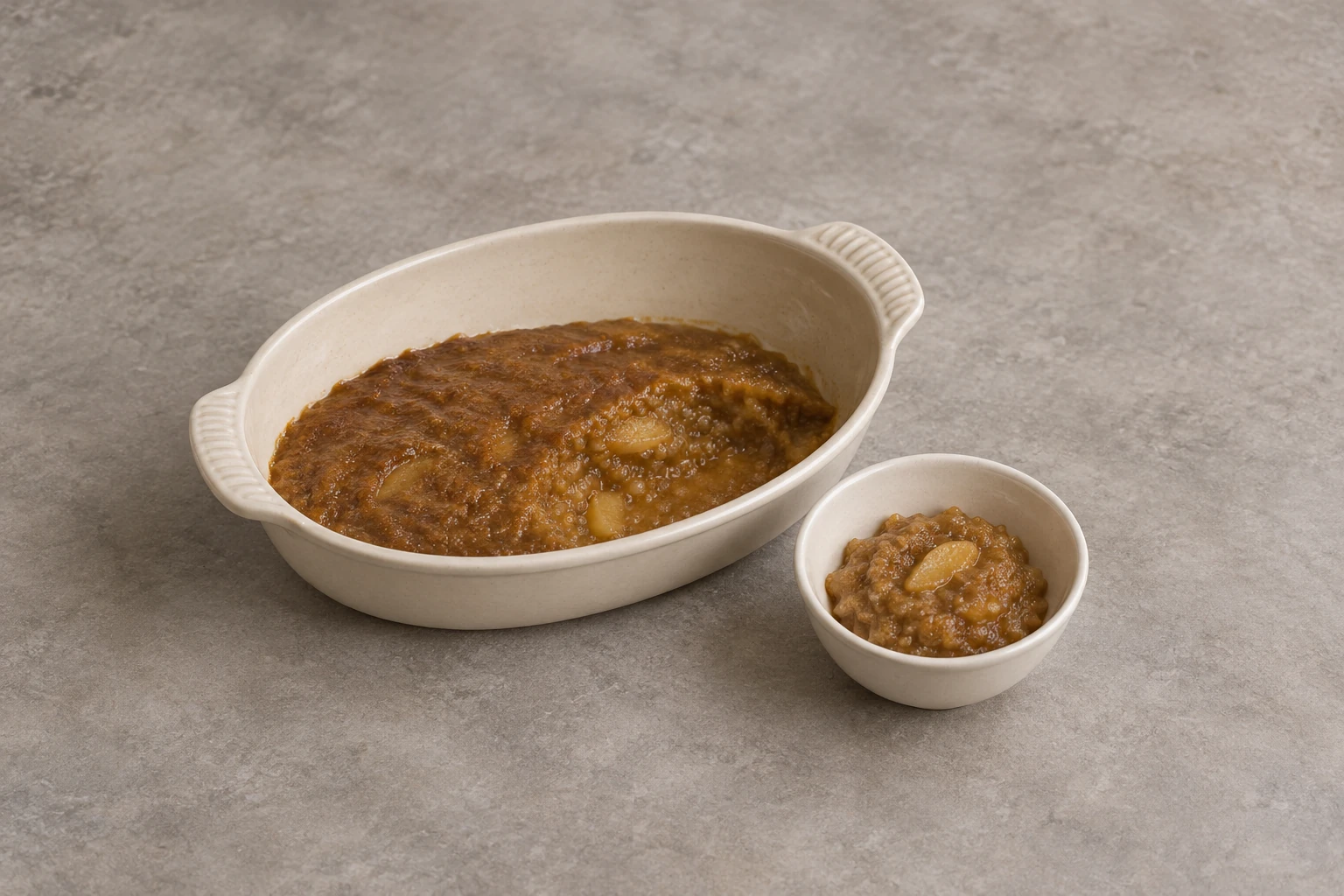
A lunch-room manager wrote for other kitchens
Nettleton identified herself as manager of the Horace Mann Lunch Room and an assistant in Institutional Administration at Teachers College, Columbia University. Her introduction addresses managers trying to meet conservation requirements and financial ends. Inexperienced people entering hospitals, canteens and community kitchens needed more than a household recipe multiplied on paper.
She says her recipes were selected from dishes used and found popular at Horace Mann. That gives the collection a stated working setting. It remains the manager-author's account, rather than a record of each pudding's service dates, finished weights or individual diners. Nettleton, One Hundred-Portion War Time Recipes, introduction, pp. 3–4.
The hundred portions were intended to be generous and substantial within an à la carte meal. Nettleton also supplied individual portion measures so that another manager could decide whether they suited the group being fed. A standard batch therefore came with an invitation to assess local needs.
Weighing made a large formula readable
Dry ingredients were weighed for accuracy and to save time. Nettleton recommended different scales for small and large kitchens, including table-sized platform and balance scales for the latter. A measured quantity could pass from one cook to another more clearly than a shopping estimate or an arbitrary scoop.
Seasoning still required judgment. The quantities were minimums to be adjusted for the people served. The book's approach combined a defined starting point with tasting and local knowledge, rather than treating a printed number as the end of cooking.
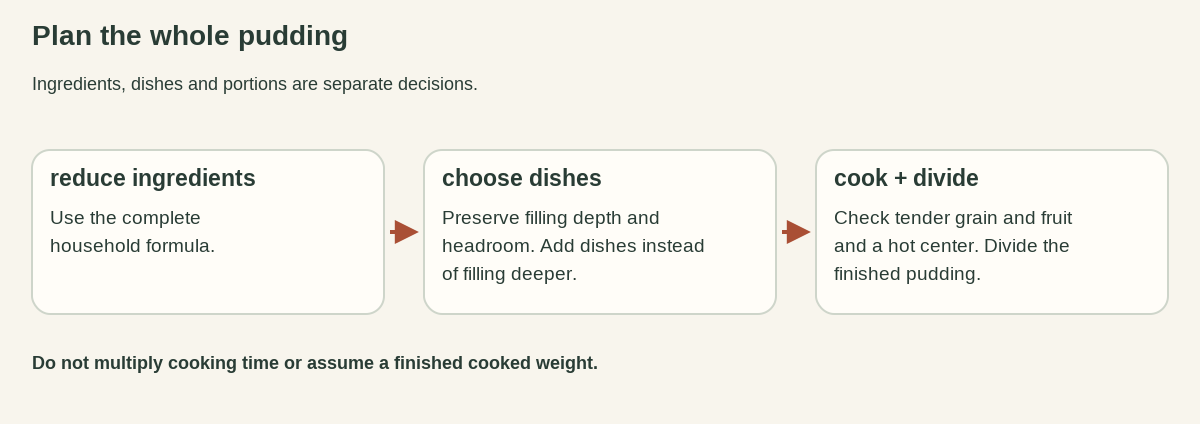
Pans were another decision. A larger quantity could occupy more dishes instead of one much deeper pudding. That choice affects how heat reaches the center and how portions are served. The difference between a historical slack oven and a numerical modern setting also remains important when moving the recipe into another kitchen.
Two puddings shared a page, not a formula
Nettleton's Baked Indian Pudding uses cornmeal, milk, ground beef suet, molasses, raisins and seasonings. Her Baked Indian Apple Tapioca Pudding also contains cornmeal, but combines it with tapioca, sliced apples and butterine. The historical headings use Indian pudding for these cornmeal preparations; they do not establish an Indigenous origin for either institutional formula. Both recipes, p. 34.
The plain pudding asks for thirteen quarts of milk, against eight in the apple version. It has two pounds of cornmeal; the apple version has one pound of cornmeal and twelve ounces of tapioca. Its fruit, fat, molasses, salt and cinnamon allowances differ too. The tapioca pudding is not simply the first recipe with apples stirred in.
Nor is tapioca replacing a listed wheat flour here. Both ingredient lists are wheatless to begin with. Their contrast shows two ways to assemble a dessert while retaining a named portion size. It does not identify a wheat pudding displaced in a particular lunch room.
The hour before the oven counted
The plain pudding's cornmeal and milk cook for an hour in a double boiler before the remaining ingredients enter. Baking then takes two hours or more in a slow oven. The apple pudding calls for tapioca soaked at least two hours and drained, alongside its own hour of cornmeal cooking and two-hour bake.
Soaking can overlap other work, but it still belongs on the schedule. The heat also has to be managed across more than one vessel. A kitchen with space, suitable bowls, an available oven and other work in progress could organize that timetable differently from someone starting one pudding after supper.
Nettleton's formulas put that distinction into concrete ingredients. Molasses needs its own identity, as the treacle and molasses reference explains. Ground beef suet is also a specified fat, with preparation and composition different from butter; the suet reference follows those distinctions. Modern substitutions should remain visible beside the quantities.
Four ounces was a target at service
If its ounces are by weight, one hundred four-ounce portions would require twenty-five pounds of finished pudding. That is a conditional production target, not a recorded batch weight. Milk and sliced-apples volumes cannot establish the finished mass without information about density, cooking loss and what remains in the pans.
Accompaniments add another preparation. The plain pudding names cream; the apple version offers Sterling Sauce or cream. Sterling Sauce has its own butter, sugar, cream, spices and beating directions on page 38. Choosing cream for the modern examples keeps a complete accompaniment without quietly adding a third sauce recipe to the pudding's ingredients.
The two home versions below are rounded twentieth-batch adaptations. Their different modern portion counts reflect the dishes actually specified here, rather than a claim to have produced five measured four-ounce servings from each reduction. Headroom, tender grain and fruit, and a hot center govern the finish.
Cornmeal, apple and tapioca pudding
Modern adaptation. Estimated yield: 4 small dessert portions. Allow about 3½–4 hours: 20 minutes preparation, at least 2 hours soaking, 1 hour cereal cooking that can overlap the last hour of soaking, 60–90 minutes baking and 10 minutes standing. A package requiring longer soaking extends the plan.
Ingredients
- 17 g small-pearl tapioca, not instant or minute tapioca
- Cold drinking water, enough to cover the tapioca for soaking, drained afterward
- 23 g fine plain cornmeal
- 380 ml pasteurized whole milk
- 95 ml plain baking molasses, not blackstrap
- 125 g apple, weighed after peeling and coring, thinly sliced
- 6 g unsalted butter, for the pudding
- 1/8 metric teaspoon ground cinnamon
- 1/4 metric teaspoon ground nutmeg
- 1.5 g fine salt
- 5 g unsalted butter, for the dish
- 60 ml pasteurized cream, optional, for serving
Equipment: Covered refrigerator container, fine-mesh sieve, heatproof bowl fitted above a saucepan of simmering water, whisk or spoon, and a shallow 1.25-liter ovenproof dish. Keep an additional small ovenproof dish available if needed for headroom. A metric teaspoon is 5 ml.
Method
- Start the tapioca soaking in cold drinking water in the refrigerator at 40°F (4°C) or below. It needs at least 2 hours, or longer if its package requires. Plan the cereal cooking to overlap the final hour of that soak; leave the tapioca soaking until step 4.
- During the last hour of soaking, whisk the cornmeal and milk in the heatproof bowl. Set it securely above gently simmering water, with its base clear of the water. Cook gently for 1 hour, stirring frequently and maintaining water in the lower pan.
- Heat a conventional oven to 300°F (150°C). Grease the baking dish with the separate 5 g butter and spread the apple slices across its base.
- Once its full soaking period is complete, drain the tapioca well and discard the soaking water. Stir the tapioca, molasses, 6 g pudding butter, spices and salt into the hot cornmeal mixture. Pour over the apples. Leave at least one-third of the dish empty; use the spare dish for excess mixture and a proportional share of apples rather than filling to the rim.
- Bake for about 60–90 minutes, checking that the apples and tapioca are tender and the pudding is thick and hot throughout, without a loose watery center. Continue baking if the pearls or apples remain firm; shield the top loosely if needed while the center finishes. Check each dish separately.
- Let stand about 10 minutes, then spoon into four small portions at the original quantity. Divide the optional cream among them and serve warm.
Adaptation notes: The batch is approximately one-twentieth of Nettleton's amounts under a declared modern US-quart convention. The apple weight is a chosen counterpart to about 190 ml sliced apples, not a measured historical density. Butter replaces butterine and is added during mixing, since the source does not give its addition stage. Tapioca grade, refrigerated soak, the borrowed double-boiler arrangement, dishes, oven setting and shorter household bake are modern specifications. Cream is the selected optional accompaniment.
Cornmeal and raisin pudding
Modern adaptation. Estimated yield: 6 small dessert portions. Allow about 3 hours: 15 minutes preparation, 1 hour preliminary cooking, 75–105 minutes baking and 10 minutes standing.
Ingredients
- 45 g fine plain cornmeal
- 615 ml pasteurized whole milk
- 34 g unsalted butter, for the pudding
- 130 ml plain baking molasses, not blackstrap
- 45 g raisins
- 1/4 metric teaspoon ground cinnamon
- 1/4 metric teaspoon ground nutmeg
- 2 g fine salt
- 5 g unsalted butter, for the dish
- 90 ml pasteurized cream, optional, for serving
Equipment: Secure heatproof bowl over a saucepan of simmering water, whisk or spoon, and a shallow 1.5-liter ovenproof dish, at least 5 cm deep.
Method
- Whisk the milk and cornmeal together in the bowl. Set it securely above gently simmering water, keeping its base clear of the water. Cook gently for 1 hour, stirring frequently and replenishing the lower pan as needed.
- Heat a conventional oven to 300°F (150°C). Grease the baking dish with the separate 5 g butter.
- Stir the pudding butter, molasses, raisins, spices and salt into the hot cereal mixture. Transfer to the dish, leaving at least one-third empty; use an additional suitable dish if needed rather than increasing the depth.
- Bake for approximately 75–105 minutes, until thick, soft and hot throughout without a loose watery center. Continue if needed and check each dish separately. This is a spooned pudding, not a firm loaf.
- Let stand about 10 minutes, then divide into six small portions. Serve warm with the optional cream divided among them.
Adaptation notes: This is a rounded twentieth of the listed batch, with butter replacing the source's ground beef suet. The substitution changes the fat and its water content. Spice spoonfuls, greasing allowance, larger modern dish, oven setting, baking range and portions are supplied choices. The separate hour of cereal cooking remains part of the recipe.
Both puddings contain milk. Refrigerate leftovers promptly in shallow containers within two hours, or one hour above 90°F (32°C), following FDA food-handling guidance. Reheat leftovers to 165°F (74°C). Keep optional cream refrigerated until service.